Injection Mold
Meaning ~ Capital asset comprising machined steel plates used to shape resin under pressure, governing production speed, part precision, and lifecycle per-unit cost.
Tooling
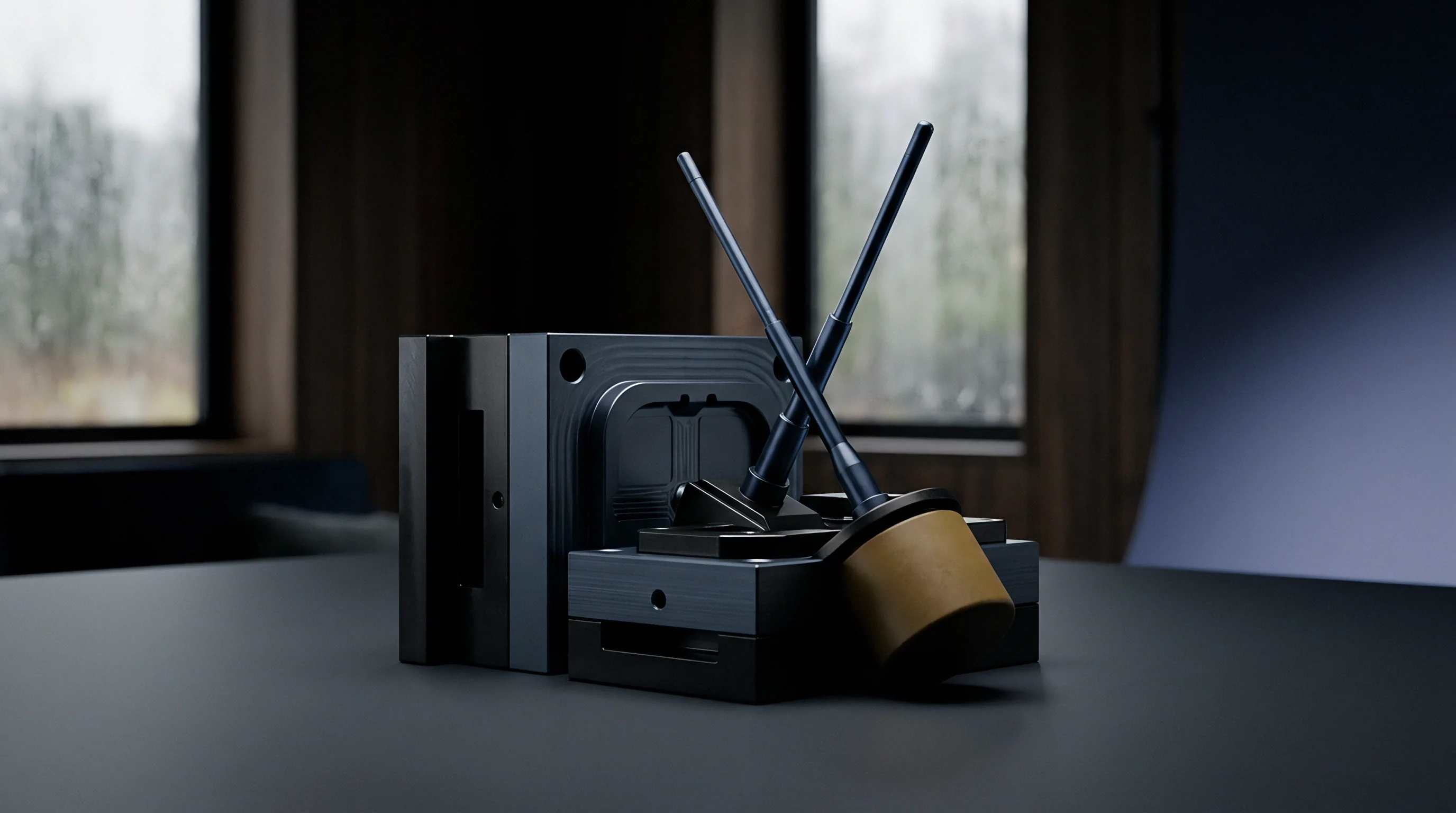
Mechanical assemblies of precision-machined steel plates and integrated internal components define the injection mold as the singular industrial apparatus used to manufacture repetitive batches of identical plastic or metal parts. Within the context of international trade and large-scale manufacturing, the injection mold represents a primary capital asset that determines the speed, scale, and dimensional consistency of the downstream product. The physical structure of this instrument contains a negative cavity that mirrors the intended geometry of the part, paired with cooling channels, ejection mechanisms, and internal runner systems that transport molten material into the secure void.
Sourcing practitioners identify the acquisition of these units as the most significant non-recurring engineering cost in a development cycle, where the payment schedule typically follows a three-stage milestone logic of deposit, trial, and sample approval. The legal boundary of the term covers the assembly itself, including interchangeable inserts and base plates, though it stops at the point of the press interface where the tool meets the factory floor’s machinery.
Every professional purchase agreement treats the acquisition of the injection mold as a distinct transaction separate from the unit price of the molded parts. Ownership resides with the buyer once the final milestone payment clears, provided the contract specifies that the title passes upon sample confirmation. We see disputes arise most frequently when the invoice bundles the tool cost into the component price, which obscures the moment of transfer and complicates exit strategies.
A clean break from a supplier requires the physical removal of the tool from the original site. Buyers who fail to define the injection mold as customer-owned property discover too late that the factory views the steel as its own intellectual byproduct or an extension of their facility’s capacity. Consequently, the buyer remains tethered to one location, unable to relocate the asset to another province or country without paying a functional ransom in the form of exit fees or disputed claims over technical drawings.
Maintenance schedules for a high-volume tool remain valid only if the factory tracks the actual shot count against the specific steel grade’s rated hardness limit.
The manufacturing process begins with the raw block of steel, often an alloy selected for its ability to withstand tens of thousands of pounds of clamping pressure without deformation. Selection of the metal grade determines the longevity of the tool and its resistance to the abrasive nature of glass-filled resins. In our audits, we confirm that P20 steel provides a reliable balance for low-to-medium volume, while H13 steel, properly heat-treated, serves the high-precision requirements of electronics or medical-grade components.
The technical specification of the injection mold dictates the eventual cycle time of the part, as the internal volume of water cooling channels controls how quickly the resin solidifies after the initial fill. Factories often under-design these cooling circuits to reduce the cost of deep-hole drilling, which unintentionally pushes the cycle time up and makes the unit price higher than it would be with a more expensive, better-engineered tool.
We document the tool’s condition through the sampling phase, traditionally labeled T0 through T3, where each digit signifies a revision cycle to the steel. The first trial reveals the primary success of the runner balance and the location of weld lines. Subsequent revisions involve removing tiny amounts of steel to bring features into tolerance or to shift the gate locations to minimize cosmetic defects.
Once steel is removed, it remains gone; adding material back into the injection mold through laser welding or insert changes increases cost and threatens the structural integrity of the parting line. Professional buyers insist on seeing the tool inspection report at T1 to evaluate the accuracy of the machining against the primary Computer Aided Design files.
| Material Category | Base Metal | Life Expectancy | Tolerance Deviation |
|---|---|---|---|
| Prototype Grade | 7075 Aluminum | 5,000 Cycles | Plus or minus 0.15 mm |
| Production Grade B | P20 Steel | 100,000 Cycles | Plus or minus 0.08 mm |
| Precision Grade A | S136/H13 Steel | 1,000,000 Cycles | Plus or minus 0.03 mm |
Trade nomenclature for the cross-border movement of an injection mold usually places the item under Harmonized System Code 8480, which covers molding boxes for metal foundry or molds for mineral materials, plastics, or rubber. This classification triggers specific duty rates that vary significantly between jurisdictions. When we shift a tool from a factory in Shenzhen to a plant in Guadalajara, the paperwork classifies the tool based on its weight and its application.
The declared value for customs purposes includes the cost of design, materials, and the hours of EDM work performed by the toolmaker. If the value on the commercial invoice understates the labor component, customs officers potentially flag the entry for valuation fraud, delaying the transfer and jeopardizing the production schedule at the destination factory.
Standard ownership language inside a manufacturing services agreement reads: all tooling, including but not limited to every single injection mold created or utilized under this purchase order, remains the sole and exclusive property of the buyer, regardless of its location or current use at the vendor facility.
Cavitation
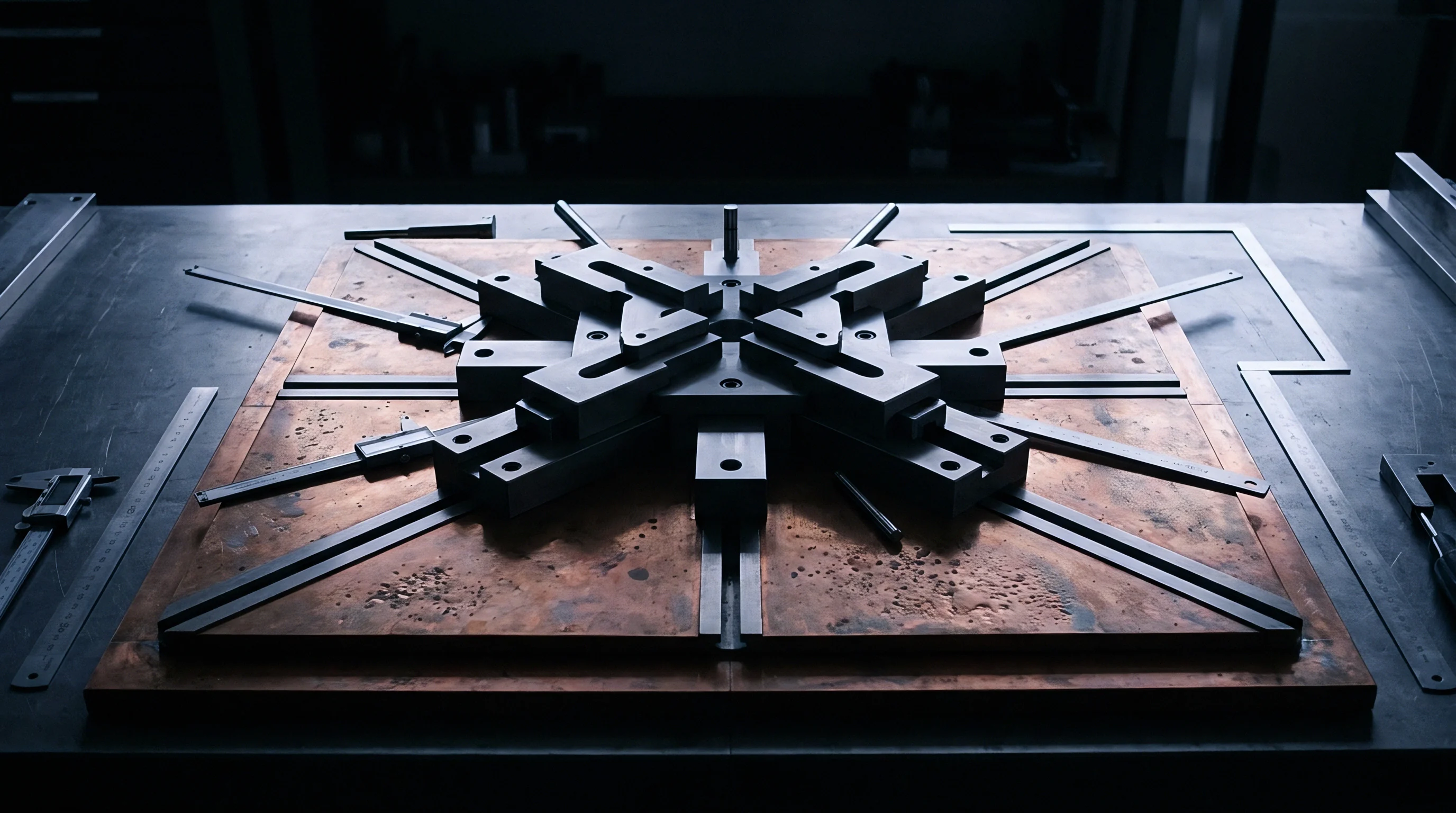
The operational density of an injection mold determines the total quantity of parts produced in a single press cycle, directly influencing the economic viability of the entire order. Multiple cavities allow for the simultaneous creation of identical items, yet each additional cavity introduces a potential for variance between the units produced within the same cycle. We examine balance through short-shot testing, where the operator reduces the injection volume to see if the fill patterns match across all cavities at the exact same moment.
An unbalanced tool fills some cavities faster than others, leading to localized stresses, flashing on the first-filled units, and sink marks on the last-filled units. Success in high-volume environments relies on a geometry that forces the resin through equal paths of resistance, ensuring that unit number one and unit number eight share identical physical properties.
Financial projections for a project scale based on this density, where a four-cavity injection mold effectively quarters the labor and overhead share of the final unit price compared to a single-cavity version. Increased complexity comes at the price of initial investment. Every additional cavity requires more complex runner systems and additional cooling headers, which increases the physical size of the mold base.
The size of the mold base then determines which tonnage of press the tool fits into, where larger machines command higher hourly operational fees. We identify the crossover point where the savings in piece-price from high cavitation are negated by the higher hourly press rate and the maintenance risks of a denser tool.
Short shot tests verify that the internal flow resistance remains consistent across all cavities regardless of their proximity to the center sprue.
The layout of an injection mold also impacts the runner scrap rate, which consists of the resin that solidifies inside the delivery channels but never becomes part of the final product. Cold runners produce a significant amount of waste that operators either discard or regrind back into the production stream. While hot runner systems maintain the material in a molten state within the tool, eliminating the runner waste, they add thousands of dollars to the upfront price and increase the maintenance complexity for the shop staff.
In electronics manufacturing, where tight tolerances are the norm, we often favor the thermal stability of a high-end hot runner inside an injection mold to keep temperatures consistent over millions of shots.
- Injection Mold configurations with interchangeable inserts allow for subtle branding changes or geometric variations without the necessity of machining an entirely separate mold frame for each regional market.
- Injection Mold validation runs at the supplier facility demand a minimum of four hours of continuous operation to prove that the heat dissipation within the steel matches the projected cooling calculations.
- Injection Mold water lines require periodic descaling using chemical agents to prevent calcification from restricting the flow rates and subsequently lengthening the cycle times beyond the agreed quotation levels.
A supplier often claims that they cannot meet the requested cycle time because the geometry of the part is far too complex for standard cooling procedures or the local water temperature exceeds the capacity of their factory chillers.
Wear
Mechanical degradation occurs whenever an injection mold opens and closes under high pressure, a process that involves the constant friction of steel sliders, guide pins, and lifters. Over thousands of cycles, the sharp edges of the parting line, where the two halves of the tool meet, begin to round off through simple physical erosion and the impact of closing forces. This rounding creates a microscopic gap that molten plastic escapes into, resulting in flash, the thin, unsightly excess material at the seam of a finished part.
Our inspectors monitor flash height as a direct proxy for the health of the tool. When flash exceeds standard limits, typically 0.1mm for non-visible areas, we require the supplier to pull the tool for refurbishment, which involves surface grinding the parting line and potentially re-cutting the cavities.
Material choice for the resin accelerates this process significantly. Glass-filled nylons act like liquid sandpaper as they rush through the gates of an injection mold at high velocities, scouring the steel surface and widening the openings over time. We have encountered instances where a tool rated for five hundred thousand shots began producing oversized parts after only two hundred thousand shots because the buyer specified highly abrasive materials without upgrading the cavity steel to a harder, specialized grade like CPM-420V.
In these situations, the buyer pays twice: once for the initial tool and again for the replacement cavities when the original ones fail to hold tolerances.
Parting line erosion manifests as increasing flash thickness during production, serving as the earliest physical indicator that the tool plates require precision surface grinding.
The movement of the injection mold during the ejection phase also introduces stress points at the interface between the pins and the mold core. Ejector pins must slide perfectly freely within their bores. If they stick or become misaligned due to poor lubrication, they potentially gouge the side of the cavity or fail to retract fully before the tool closes for the next cycle.
This leads to catastrophic tool damage known as crashing, where the hardened steel pins are smashed against the opposite plate. We once absorbed a three-week production delay because a supplier bypassed their monthly maintenance checklist, resulting in a pin seizure that destroyed two precision inserts.
Steel hardness, measured on the Rockwell C scale, provides the quantifiable data needed to predict this lifespan. Pre-hardened steels sit between 28 and 32 HRC, which allows for easier machining but offers less resistance to the daily rigors of high-pressure cycling. Tools intended for long-term production reach levels as high as 54 HRC after secondary heat treatment, a state that makes the steel significantly more durable but also more brittle.
A buyer who looks only at the quote without checking the steel hardness values on the BOM ends up with a tool that wears out long before the project has amortized its initial investment.
We lost four days of production and paid for five express air shipments after neglecting to verify that the supplier used high-temperature grease on the sliders, leading to a seizure that locked the tool in the open position during a night shift.

Precision
Determining the repeatable accuracy of an injection mold relies on the relationship between the steel dimensions and the shrinkage characteristics of the specific polymer being used. Every resin contracts as it cools, but the rate varies based on the chemical makeup, moisture content, and the pressure applied by the machine. Toolmakers compensate for this by cutting the cavity slightly larger than the final part size.
We check the success of this compensation by measuring sample parts on a Coordinate Measuring Machine after they have reached thermal equilibrium, typically forty-eight hours after production. If the part comes out small, the error is within the steel, where the maker can simply remove more metal to widen the gap. If the part is too large, the tool is steel-safe, meaning correcting it involves expensive welding or complete insert replacement.
Tolerances for plastic parts usually sit between plus or minus 0.05mm for high-end items and 0.2mm for consumer commodities. Tight specifications within an injection mold create a requirement for active climate control on the factory floor, as seasonal temperature swings shift the dimensions of both the aluminum part jigs and the steel tool themselves. In our experience, buyers often specify tolerances derived from a 3D model that do not account for the natural warp of large, flat plastic surfaces.
A well-designed tool uses draft angles, a slight taper on vertical walls, to allow the part to slide out easily. Without sufficient draft, usually at least one to two degrees, the ejection forces will scratch the surface of the plastic or leave white stress marks that signify internal structural damage.
Dimensional stability relies as much on the cooling pattern within the tool as it does on the initial precision of the cavity milling.
We categorize visual defects found during the inspection of samples into classes that indicate specific tool issues. Flow lines suggest that the gates inside the injection mold are too small or located in the wrong area, causing the plastic to cool inconsistently as it journeys to the edges of the part. Gas traps occur when air gets stuck in deep corners of the cavity because the venting channels are blocked or undersized.
Resolving these issues after the tool is built requires the toolmaker to mill tiny grooves into the parting line to allow air to escape without letting the molten plastic through. In many cases, we insist on a mold flow analysis before the steel is cut to predict these problem areas and solve them during the digital design phase.
- Injection Mold steel certificates must include the original mill test reports to confirm that the factory actually used the high-grade alloys quoted in the initial proposal rather than a cheaper local substitute.
- Injection Mold cooling layouts should maximize the proximity of the water channels to the primary heat sources to ensure that the material solidifies uniformly without developing internal vacuums or surface sink.
- Injection Mold surface finishes are categorized by standards like the SPI scale, where an A1 finish signifies a diamond-buffed mirror polish and a D3 finish indicates an abrasive bead-blast texture.
Does the current tolerance on the critical dimensions allow for the natural variation caused by regrind usage during extended production windows?
Transit
Logistical management for an injection mold begins with the physical preparation of the unit for long-distance transport, a process that involves heavy-duty protective treatments. Since the tool is made of steel, any moisture inside the crate will lead to surface oxidation, which ruins the precision mirror finish of the cavities. We require factories to apply a thick layer of industrial anti-rust spray, often a blue or green petroleum-based coating, before the tool is wrapped in vacuum-sealed plastic.
Once sealed, the injection mold sits inside a reinforced wooden crate that is designed to support the immense weight, which often exceeds three tons for large automotive components. If the crate fails to balance the center of gravity, it will likely tip during a crane lift, potentially cracking the precision guide pins that maintain the internal alignment of the plates.
Insurance coverage for moving an injection mold differs from standard cargo policies because the value lies not in the scrap metal but in the technical design work and the production schedule it supports. When we move a tool between countries, we utilize comprehensive marine or air insurance that covers the cost of replacement tooling and the potential loss of business due to delays. A tool dropped at the port is not merely damaged steel; it represents the loss of months of project lead time.
Buyers specify the shipping terms, often opting for Carriage Paid To if they want to control the insurance and logistics provider themselves. We see clear benefits in choosing air freight for critical tools despite the higher cost, as the reduced time spent in high-humidity shipping containers lowers the risk of rust damage significantly.
Correct crating methods include internal chocks that prevent the mold from sliding within the box during turbulent sea or road transit.
Customs procedures for the temporary importation of an injection mold allow for lower tax rates if the tool is expected to return to its origin after a short production run. We use ATA Carnets for this purpose when the tool is traveling for validation at a foreign laboratory or a customer site, which bypasses the standard duty payments in over eighty countries. For permanent relocations, the buyer must provide a comprehensive valuation that breaks down the development hours versus the material costs.
Disputes with customs officers often center on whether the injection mold is a standalone piece of machinery or an accessory to the press, which can shift the classification into higher tariff brackets. Clear documentation describing the tool’s end-use in the production of plastics usually settles these arguments before they become legal disputes.
Weight limits on common containers mean that a large set of four or five injection mold units can easily hit the structural maximum of a twenty-foot container before filling the space. In these shipments, we insist on verified weight measurements at the factory gate to avoid rejections at the terminal. If the paperwork is short even five kilograms of the actual mass, the container potentially gets blocked from loading, causing missed sailings and warehouse storage fees.
Success depends on the buyer communicating these physical constraints to the loading dock team before the truck arrives.
A rule of thumb suggests that the cost of shipping a tool via air increases by roughly seven percent for every week the anti-rust treatment is left unmonitored once the crate arrives in a tropical climate.

Ledger
Amortization of the injection mold cost represents the primary mechanism by which the initial engineering investment is recovered through high-volume sales. In the buyer’s spreadsheet, we divide the total cost of the tool, including revisions and shipping, by the total expected number of parts in the product lifecycle. This creates a hidden cost per part that often escapes detection if it is not explicitly listed in the landed cost calculations.
For a fifty-thousand-dollar tool intended to produce one hundred thousand units, the effective amortization is fifty cents per unit. If the project is canceled after twenty thousand units, the actual cost per unit effectively jumps significantly, representing a massive unrealized expense that hits the bottom line of the sourcing project.
Capital asset management teams monitor the injection mold value on the balance sheet, depreciating the tool over its estimated productive life. However, unlike standard warehouse machinery, the tool’s true value lies in its current readiness to produce parts. An old injection mold that has been properly maintained and has plenty of shots remaining on its steel is more valuable to the business than a newer tool that has been run aggressively with zero maintenance.
We use shot counter data, often physically integrated into the tool base, to verify the actual use against the factory’s claims. If a factory reports fifty thousand shots but the internal counter reads seventy-five thousand, they have likely used your tool for someone else’s production or are running cycles with high regrind to cut costs.
| Order Quantity | Base Tool Cost | Amortization per Unit | Total Landed Load |
|---|---|---|---|
| 10,000 Units | $40,000 | $4.00 | $4.85 |
| 50,000 Units | $40,000 | $0.80 | $1.65 |
| 100,000 Units | $40,000 | $0.40 | $1.25 |
| 500,000 Units | $40,000 | $0.08 | $0.93 |
Exit planning involves the accurate accounting of secondary tool components like spare inserts, heater bands, and thermocouples that the buyer has already paid for. During a supplier transfer, we often find that the injection mold is complete but the essential spares are missing, having been used up during repairs without being replaced. Our ledger tracking ensures that the factory replenishes the spare kit before they receive the final piece-price payment for the concluding batch.
This inventory verification avoids a scenario where the new factory receives a tool but cannot run it because an essential heater band is blown and the spare bin is empty.
The transition from prototype tools to production units creates a unique financial risk where the initial injection mold yields successful samples but fails to scale under high-speed automation. We mitigate this by holding a retention fee, typically ten percent of the tool’s value, until the tool successfully completes a marathon production run of twenty-four hours without failure. This marathon run proves that the injection mold can handle thermal expansion and repeated stress without seizing.
Suppliers who push back on this retention usually lack confidence in their engineering or the hardness of the steel they used.
Negotiations conclude with a verified inventory list of every single injection mold insert and slider, along with a confirmed schedule for the replacement of consumable parts at the factory’s expense.

Verification
Independent audits of the injection mold condition provide the final confirmation that the asset the buyer paid for matches the item physically residing in the factory. We deploy inspectors to photograph the parting line, the slider guides, and the internal cooling inlets to check for signs of neglect or unprofessional modifications. These visits often reveal “helper” features, such as roughly ground-down steel edges or extra-wide vents that look crude but were necessary for the factory to hit its numbers with old machines.
While these modifications solve a short-term issue for the supplier, they potentially shorten the life of the tool or change the part’s appearance. We identify these changes early through before-and-after photographic comparisons between the samples we approved and the tools on the floor.
Successful handover of an injection mold requires a complete technical package consisting of the CAD files, the material certifications, and the mold flow analysis results. Factories frequently withhold the original engineering drawings as a way to maintain leverage over the buyer, claiming the design is their intellectual property. In contrast, the professional trade standard mandates that since the buyer paid for the tool’s development, the drawings belong to them.
We insist on receiving these files in a non-proprietary format like STEP or Parasolid before we release the sample approval payment. Without these digital assets, the buyer cannot easily maintain the injection mold or reproduce it if it is destroyed in a disaster.
Digital records of the tool’s history should include every modification or repair made to the steel to allow a future molder to calibrate their process correctly.
The performance of the injection mold is ultimately quantified through statistical process control data gathered during production runs. We measure the critical-to-quality dimensions across three shifts to see if the tool dimensions drift as it gets hotter. If the measurements start to tighten up after six hours of running, it signifies that the cooling is not aggressive enough and the tool is thermally expanding more than planned.
Conversely, a stable tool produces consistent results from the first shot to the last. This consistency is the hallmark of a tool that was built with the right steel and engineered with proper cavitation and gate positioning.
In our practice, we have observed that the injection mold remains the most vulnerable yet most powerful link in the supply chain for molded components. It is simultaneously a master pattern, a high-pressure vessel, and a complex heat exchanger. Managing it effectively requires the discipline of an engineer, the foresight of a logistics specialist, and the hard arithmetic of a buyer.
When these fields align, the result is a stable, high-margin production cycle that can be reliably moved across the globe as the business demands. Failure in any one area results in empty containers, high scrap costs, and disputes that end in lost projects.