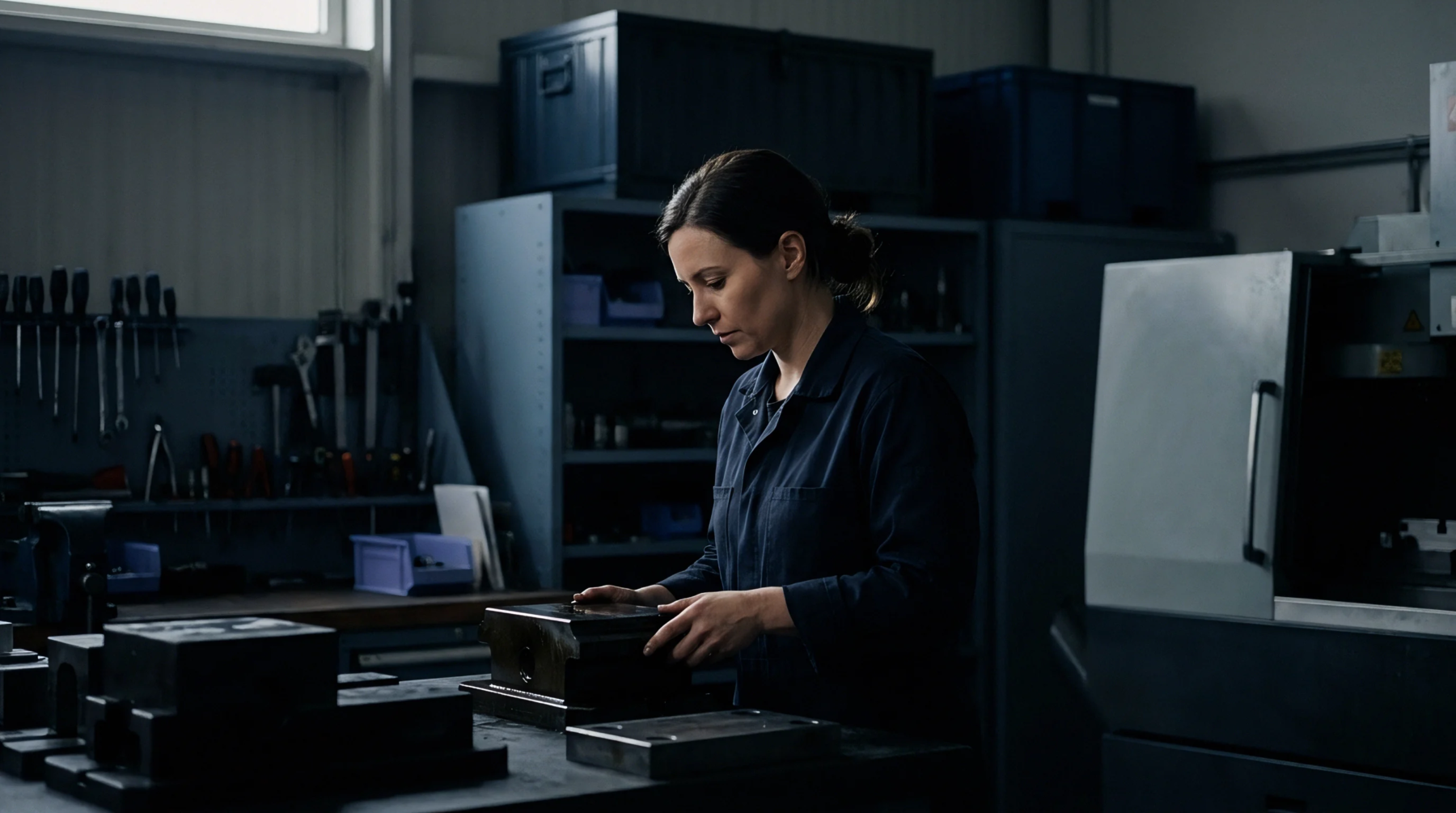
Injection Mold
Meaning ~ Capital asset comprising machined steel plates used to shape resin under pressure, governing production speed, part precision, and lifecycle per-unit cost.
A cold runner system functions as an injection molding configuration where the material transport channels remain at ambient temperatures throughout the production cycle. Excess plastic polymer trapped within these channels does not solidify during the cooling phase of the primary cavity. Operators recover these materials for regrinding and reuse in subsequent production runs to minimize waste and raw material expenditure.
The arrangement protects the buyer from high initial tooling expenses while creating a distinct waste stream that requires systematic management during the manufacturing process. Design specifications dictate that the channels must allow for easy ejection of the solidified feed alongside the finished part to ensure high cycle efficiency.
Production schedules rely on the thermal management of this setup to maintain cycle speeds. When mold cavities reach full capacity, the unmelted plastic in the channels exits the mold as scrap. Factories perform secondary separation to salvage this unused polymer, provided the material retains its mechanical properties after the injection heat history.
Misalignment between the injection pressure and the channel geometry increases the risk of excessive material build up, which forces frequent machine pauses for maintenance. Costs accumulate rapidly when reground material loses its structural integrity, as this degradation limits the percentage of recycled content permitted in new parts. Contracts often specify the maximum allowable ratio of reground content to virgin resin to prevent hidden quality failures in structural components.
Technical staff often mistake this arrangement for a hot runner system, yet the two methods diverge on thermal control and economic performance. Hot runners heat the transport channels to keep plastic molten, which eliminates waste but adds complex electronic components to the tool. A cold runner system avoids these expensive heater bands and temperature controllers, which simplifies the tool design significantly.
Simple construction makes repairs cheaper when damage occurs on the shop floor. Complexity dictates the cost variance because the simpler design lowers the barrier for entry for high volume production runs. Tooling budgets decrease when engineers select the simpler thermal configuration for standard commodities.
Financial risk emerges when the volume of waste exceeds the market value of the salvaged resin. Low scrap rates justify the initial material loss if the mold lifecycle remains long enough to amortize the total expenditure. Suppliers include the cost of channel waste in the per unit price calculation based on the estimated cycle time and the weight of the material in the channels.
Disputes occur when actual waste generation exceeds the agreed material loss allowance defined in the purchase contract. Proper calibration of the injection gate minimizes the size of the runner and shifts the profitability of the molding operation back toward the buyer. Accurate tool design reduces the weight of the runner and improves the final cost per unit.
Meaning ~ Capital asset comprising machined steel plates used to shape resin under pressure, governing production speed, part precision, and lifecycle per-unit cost.
Expertise is a utility, not a secret. sentiention™ publishes its working knowledge as open reference: intelligence layer covering the materials it sources, the markets it enters, and the reference that serves both.