Sorting Cost
Meaning ~ Expense of manually isolating non-conforming items from a suspect shipment to secure a clean point for the production line without halts.

Liability
Recovering the expense of manually sorting non-conforming items from a suspect shipment is a basic fixture of supplier quality agreements. It determines who pays for the labor, administrative overhead, and line disruptions when defective parts exceed an agreed threshold. Classified as an external failure cost within the broader cost of poor quality, the expense is billed via a quality debit note or service recovery invoice issued by the buyer.
The charge covers the labor hours, fixture costs, and administrative efforts required for a one hundred percent inspection to re-establish a clean point for the production line. Its scope ends cleanly: once the suspect material is separated into confirmed conforming and non-conforming lots, the charge no longer applies, and it never covers subsequent reworking or scrapping of the bad parts.

Contractual Foundations and Cost Allocation
Allocating this charge relies on the principle of conforming delivery. Under standard international trade terms, sellers must deliver goods matching the technical drawings and specifications cited in the purchase order. When pre-shipment inspection is skipped or a latent defect slips through, the receiving plant usually ends up sorting the shipment.
Cost recovery simply pushes that expense back onto the supplier. Supplier audits show that disputes routinely stem from master supply contracts that fail to define an authorized sort clearly. To avoid friction, contracts must spell out hourly labor rates, administrative markups, and the exact conditions that allow a buyer to start sorting without prior written consent from the supplier.
Sourcing agreements usually place these rules in a supplier quality manual signed alongside the master purchase agreement. Under the manual, discovering a defect on the assembly line gives the buyer the right to launch third-party containment to avoid shutting down the plant. The supplier is billed for the total hours worked by the containment team, regardless of the component’s unit value.
A ten-cent plastic bracket can easily trigger thousands of dollars in sorting costs if it threatens to freeze an automotive assembly line, where downtime costs accumulate fast. In practice, the contractual liability serves as a risk-mitigation tool, giving suppliers a direct financial reason to enforce strict quality control in their own plants.
What Triggers the Sorting Process?
Formal sorting starts when a quality notification is logged in the buyer’s enterprise resource planning system ~ triggered when incoming inspection or a line operator catches a defect that makes parts unusable. A single critical defect, like a missing weld on a structural frame or a cracked snap-fit arm on an electronic housing, is enough to force containment. Once the notification is logged, the buyer issues a scrap or sort instruction.
The suspect lot goes on physical hold, giving the supplier a short window ~ typically twenty-four hours ~ to decide whether to sort the parts themselves, clear the buyer to do it, or fund an independent third-party quality service to run the containment.
The drive to sort comes straight from the production schedule. Without safety stock for the affected part, returning the full shipment isn’t an option because the factory cannot stop. In these cases, the buyer begins sorting the shipment immediately to pull out enough clean parts to keep the assembly line running.
This action is backed by the quality agreement, which grants the buyer the unilateral right to launch containment when a line stoppage is imminent. The supplier’s liability for these hours stands, provided the defect is later confirmed as a manufacturing deviation from the approved sample or technical drawing.
Sellers who maintain a resident engineer at the buyer’s factory resolve quality disputes far faster than those who manage containment from an offshore headquarters.
Where this liability stops is often debated. Financial responsibility covers restoring inventory to a usable state or isolating usable parts, but it does not extend to buyer product development, routine receiving audits, or labor spent on parts already built into finished goods before the defect was spotted. Once inspectors finish checking the suspect lot and separate conforming from non-conforming units, the sorting phase ends.
Any remaining non-conforming parts move to return material authorization or scrap procedures ~ separate transactions handled under different contractual clauses.

Quarantine
Isolating suspect inventory right on the receiving dock keeps bad components out of active assembly, where they could trigger widespread defects. Physical containment is always the first operational move during a quality escape. Once a quality notification is raised, warehouse staff relocate the affected pallets to a designated hold area enclosed by physical barriers.
Pallets are wrapped in high-visibility tape and tagged with non-conforming material hold labels showing the quality notification number, part number, batch code, and isolation date. This keeps workers from mistakenly releasing suspect parts to the floor while the team figures out a sorting plan.

Establishing the Containment Zone
Containment zones are laid out specifically to prevent mixed stock. A warehouse manager assigns space on the shipping dock or in an adjacent facility to serve as the sort bench ~ ensuring it is clean, well-lit, and equipped with necessary gauges, calipers, and work instructions. Product flows in a single direction: from raw suspect pallets to the bench, then onto either green-wrapped conforming pallets or red-wrapped rejected pallets.
This linear path tracks every unit and prevents uninspected parts from mixing with checked ones.
Inspectors work off a formal sort instruction or quality alert ~ a single-page document outlining the defect, showing side-by-side photos of pass and fail conditions, and defining the test method. Testing can range from visual inspection under designated lighting to dimensional checks with go/no-go plug gauges or functional runs on custom fixtures. Both the warehouse supervisor and the supplier quality engineer sign off on the instruction so acceptance criteria match on both sides.

Sampling and Risk Assessment
Before kicking off a full sort, quality teams usually run a targeted sample to gauge the defect rate and confirm whether the problem is systemic. These checks rely on statistical sampling tables like ANSI/ASQ Z1.4 using a normal single sampling plan for attributes. If defect levels are low, the buyer may accept the lot at a negotiated discount.
If defects breach the acceptance limit, the entire shipment is rejected and sorting begins. That sample data gives the buyer the statistical proof required to justify containment to supplier management.
- Sorting cost allocations activate when a shipment contains defects exceeding the acceptable quality limit, forcing immediate segregation of suspect cartons on the receiving dock.
- Sorting cost recovery becomes the primary financial shield if a supplier refuses to accept a returned shipment, necessitating an on-site inspection to maintain assembly schedules.
- Sorting cost liabilities often escalate when mixed-grade components are loaded into automated feeder bowls, where irregular dimensions trigger continuous machine jams.
- Sorting cost calculations rely on actual unit counts rather than estimated reject rates, requiring a documented tally of every part run through the fixture.
This systematic containment is the primary barrier between a shop-floor defect and finished goods. Setup hours for the containment zone, pallet transfers, and initial sampling all roll into the overall containment expense. They are logged on daily containment reports sent to the supplier, providing a clear running tally of charges.

Bench
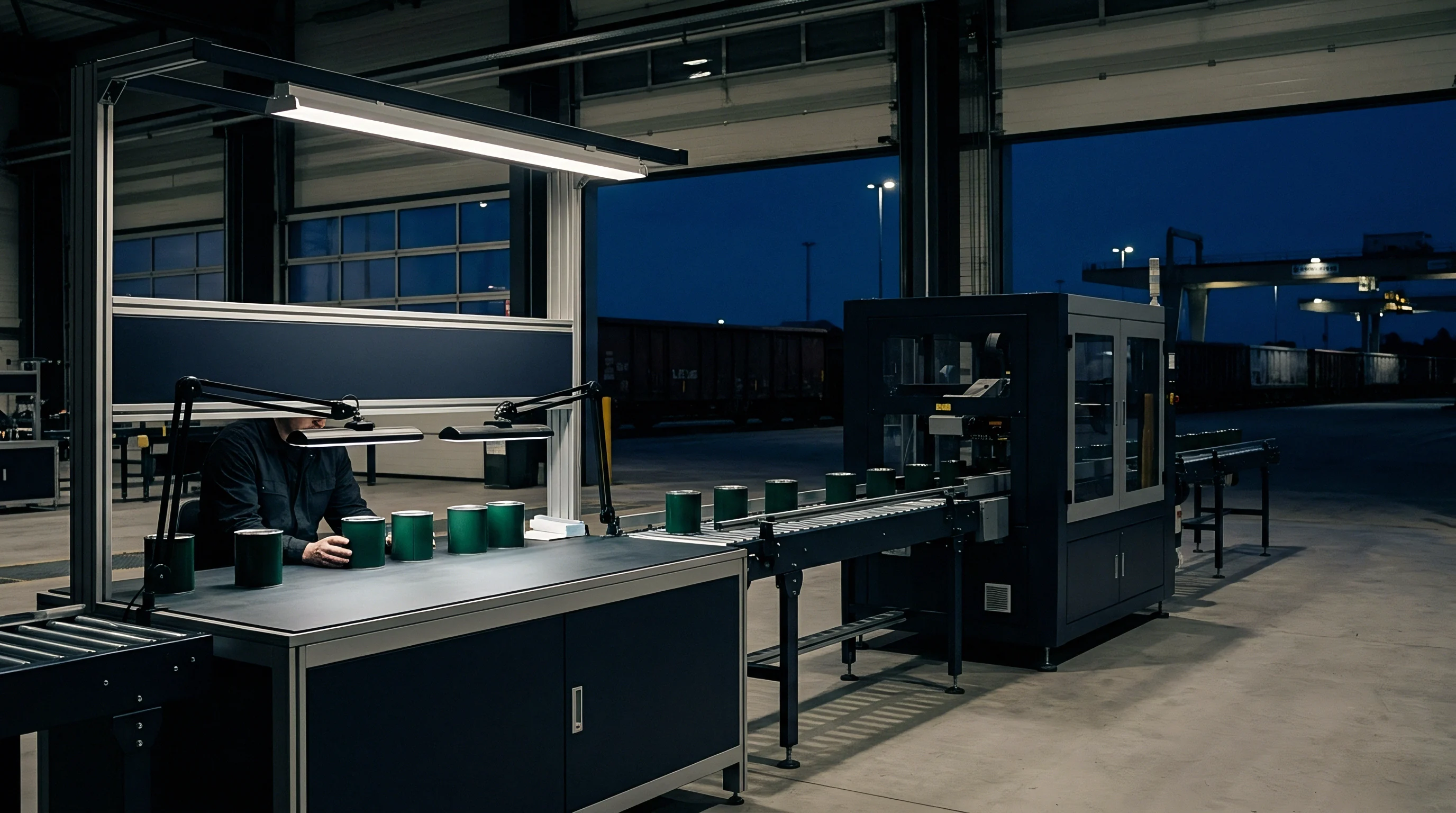
Inspecting and measuring components from a disputed batch happens under controlled lighting so subtle dimensional variations do not slip through. This is where the hands-on work takes place. Bench setups balance speed and accuracy, as sorting throughput is usually the biggest driver of final cost.
Sorters use custom fixtures that secure each part while pneumatic or mechanical gauges check critical dimensions. The work is repetitive and intense, requiring disciplined operators who maintain speed without letting bad parts through.

The Logistics of Third-Party Containment
If a supplier cannot send their own staff to sort, the buyer usually hires a third-party containment firm. These agencies keep mobile teams of trained inspectors ready to deploy to warehouses or assembly plants on short notice. Operating under a work instruction approved by both buyer and supplier, the third-party setup ensures an independent, auditable count of defect rates.
The agency bills the buyer, who then passes those charges along to the supplier via back-charge.
Third-party containment is standard practice in high-volume sectors like automotive and electronics. These agencies understand manufacturer quality protocols, including Controlled Shipping Level 1 (CS1) and Controlled Shipping Level 2 (CS2). CS1 mandates that the supplier perform a redundant, one hundred percent inspection at their own plant.
CS2 escalates this to a second redundant inspection by an independent third party at the buyer’s plant, funded by the supplier. Escalation to CS2 happens when a supplier’s internal containment fails to keep defects off the customer’s line.
A standard assembly-line containment in a North American warehouse incurs a basic bench charge of forty-five dollars per hour when executed by an external quality containment agency.
The sorting crew logs daily metrics on inspection sheets ~ often called I-charts ~ that record total parts checked, accepted counts, rejections, and specific defect types. These I-charts are vital during dispute resolution. They give supplier engineers the raw data needed for root-cause analysis and corrective planning, while offering buyers concrete proof that billed hours reflect actual bench output.


Arithmetic
Determining the exact financial toll of a quality escape requires tracking operator hours, admin fees, and materials used. The total is never a flat rate taken off a price sheet; it reflects real labor, overhead, and supplies spent during containment. At its simplest, the formula multiplies total labor hours by the contract hourly rate, then adds administrative and material markups.
Real-world calculations tend to expand as shift premiums, supervisor ratios, and tool amortization enter the picture.

The Math of Containment Labor
Calculating sorting costs starts by establishing total sorter hours ~ multiplying the number of sorters by hours per shift and total shifts. A typical run for ten thousand brackets might call for four sorters working an eight-hour shift. The math hinges on throughput: how many parts one inspector checks per hour.
If throughput is one hundred and twenty parts an hour, inspecting ten thousand parts takes eighty-three point three hours. At forty-five dollars an hour, direct labor comes out to three thousand seven hundred and fifty dollars.
Direct labor is only part of the bill. Most agreements mandate supervisor oversight to confirm that work instructions are followed and daily logs stay accurate. Ratios typically run one supervisor per four or five sorters.
At sixty-five dollars an hour, that supervisory labor gets added to the tally, along with a standard administrative fee ~ a flat charge covering buyer management costs, quality notification processing, and debit note issuance.
| Manufacturing Hub | Hourly Sorter Rate (USD) | Shift Supervisor Rate (USD) | Standard Administrative Fee (USD) | Minimum Containment Charge (USD) |
|---|---|---|---|---|
| United States (Midwest) | 45.00 | 65.00 | 150.00 | 500.00 |
| Mexico (Bajio Region) | 15.00 | 25.00 | 100.00 | 250.00 |
| Germany (Bavaria) | 55.00 | 80.00 | 200.00 | 600.00 |
| China (Yangtze River Delta) | 12.00 | 20.00 | 100.00 | 200.00 |
| Note: Hourly rates exclude local value-added taxes and represent standard weekday shift operations without premium overtime or holiday surcharges. | ||||
A Worked Case Analysis
Consider how these numbers stack up in a typical case. A Tier 1 automotive supplier in Mexico ships twenty thousand stamped steel brackets to an assembly plant in Michigan. Unboxing reveals burrs on mounting holes that block bolts from threading properly.
Stopping the line is impossible, so the plant manager triggers emergency containment through a local third-party agency. The agency assigns five sorters and one supervisor for three consecutive eight-hour shifts. With a simple go/no-go plug gauge test, throughput hits one hundred and fifty parts per hour per sorter.
Sorting twenty thousand parts at one hundred and fifty parts per hour demands one hundred and thirty-three point three sorter hours. Split among five sorters, each works twenty-six point seven hours across three shifts. Supervisory time covers those same three shifts, totaling twenty-four hours.
Michigan labor rates are forty-five dollars an hour for sorters and sixty-five dollars for supervisors, plus a one hundred and fifty dollar administrative fee for logging the SCAR (Supplier Corrective Action Request). The total breaks down as follows:
Sorter Labor: 133.3 hours multiplied by 45.00 USD equals 6,000.00 USD. Supervisor Labor: 24.0 hours multiplied by 65.00 USD equals 1,560.00 USD. Administrative Fee: 150.00 USD.
Total Sorting Cost: 7,710.00 USD.
That grand total of 7,710.00 USD is back-charged to the Mexican supplier. Notably, this figure excludes replacement parts or expedited freight ~ it reflects only the cost of separating good parts from bad to keep Michigan assembly moving. Had the supplier responded within twenty-four hours and fielded a local crew, they could have avoided buyer supervisory and admin markups, underscoring the practical value of fast local representation.
- Sorting cost elements include direct operator hours spent on the containment line, billed at a pre-negotiated bench rate.
- Sorting cost overheads incorporate supervisor oversight hours, which are typically capped at a fixed percentage of total labor.
- Sorting cost materials like custom gauges, temporary storage bins, and replacement packaging materials are billed at actual cost.
- Sorting cost administrative fees represent the standard processing charge levied by the buyer to cover supply chain logistics and debit reconciliation.


Agreement
Contractual frameworks and purchase order terms establish the legal baseline for recovering quality losses. The supplier quality agreement serves as the primary legal mechanism, usually executed as an addendum to the master supply contract or long-term agreement. It sets quality standards, sampling plans, PPM thresholds, and financial liabilities for non-conforming goods.
Drafted by buyer legal and quality teams, it must be signed by both parties before the initial purchase order is issued, ensuring the supplier explicitly accepts containment risk.

Key Clauses and Indemnification
At the heart of the quality agreement sits the indemnification clause, requiring suppliers to hold buyers harmless against losses, damages, or costs from non-conforming deliveries. Standard contract terms often embed a pre-negotiated bench rate within this clause ~ the hourly rate billed if internal personnel handle sorting. Fixing this rate up front avoids prolonged arguments over internal labor billing, which fluctuates depending on plant location and local union agreements.
Agreements also define required response times once defects are logged. Sourcing manuals generally give suppliers twenty-four hours from receiving a quality notification to respond. If they miss that window, the contract allows the buyer to launch a third-party sort and bill back all associated costs.
This rule keeps the buyer’s assembly line moving and prevents suppliers from dragging out containment while haggling over sorting terms.
Who Pays for the Sorting Work?
Sorting liability hinges on establishing a clean point ~ the first production batch guaranteed defect-free, identified by a specific batch number, carton label, or date code. Under a solid agreement, the supplier pays for all sorting costs until that clean point arrives and is verified at the buyer’s plant. If five consecutive shipments carry defects, the supplier pays to sort all five until a clean lot clears receiving inspection.
Section seven of the automotive quality agreement binds the supplier to pay for all downstream line disruptions if the defect rate exceeds fifty parts per million.
Third-party containment rules are explicitly defined: the agency must be buyer-approved, but supplier-funded. This prevents suppliers from hiring cheap, unvetted sorters who might let bad parts slip through onto the line. Buyers maintain lists of approved agencies evaluated for speed, capability, and reporting accuracy.
Mandating an approved vendor keeps containment work rigorous and reduces the risk of repeated escapes.


Ledger
Financial reconciliation ties warehouse intake records directly to accounts payable. Once sorting wraps up, teams hand over final timesheets and inspection logs to build a quality debit package for supply chain and accounting review. To stand up to finance audits and prevent supplier rejection, the package must include the original quality notification, signed sorting authorization, daily timesheets, third-party invoice, and final scrap report.

Managing the Quality Debit Note
After package approval, the buyer issues a quality debit note ~ a formal document reducing outstanding purchase order balances. Passed through the ERP system, the note offsets pending invoices. In cross-border trades, buyers usually net the sorting charge against the next scheduled payment, recovering costs immediately rather than waiting on a supplier refund check.
Supplier finance teams then review the debit note and backing files. If paperwork holds up, they issue a formal credit note under applicable tax laws, such as Section 34 of the CGST Act in India or corresponding European Union VAT rules. These credit notes adjust tax liability by documenting the reduced transaction value.
They are kept distinct from goods credit notes, as they represent service recovery or commercial damages rather than simple material returns.
- Review the original Quality Notification or Line Rejection slip to match the defect type and quantity to the affected batch number.
- Verify that a signed sorting authorization exists, confirming the supplier agreed to the containment labor rates and hours.
- Examine the third-party agency timesheets to ensure the hours charged match the shift records on the production floor.
- Consolidate the sorted quantities and scrap figures to balance the physical inventory against the invoice line items before issuing a debit note.
| Cost Component | Verification Document | Signatory Authority | Reconciliation Method |
|---|---|---|---|
| Agency Sorting Labor | Timesheet and Agency Invoice | Warehouse Supervisor and Agency Lead | Match total hours to shift logs and signed sorting authorizations |
| Rework Materials | Purchase Receipt or Inventory Issue Slip | Materials Manager | Verify raw material or packaging consumption per sorted unit |
| Line Downtime Penalty | Line Interruption Report | Assembly Plant Manager | Calculate minutes of stopped assembly times the contract rate |
| Scrap of Non-Conforming Parts | Scrap Certificate and Quality Notification | Supplier Quality Engineer | Reconcile physical scrap count against the return material authorization |
Reconciling debits requires tight coordination between buyer quality and finance teams. Missing signatures on sorting authorizations or sloppy timesheets give supplier finance valid grounds to reject a debit note, starting a long argument. Missing floor documentation drives most rejected debits.
Standardizing the reconciliation workflow ensures every claim carries solid backup, cutting unrecovered costs.

Remedy
Documented quality costs provide direct leverage for improving vendor production standards. Recovering sorting charges is more than accounting; it is a primary quality management tool. Tracking containment expenses by vendor exposes high-risk suppliers driving floor disruptions, feeding directly into monthly scorecards reviewed during strategic sourcing decisions.
Driving Corrective Action and CAPA
When sorting charges cross a set threshold, the quality manager triggers a formal CAPA (Corrective and Preventive Action) request. This forces the supplier into structured root-cause analysis ~ like a 5-Why exercise or fishbone diagram ~ to figure out why the defect happened and how it bypassed internal checks. The supplier must then put permanent corrective controls in place, such as retooling a stamping die or installing inline vision inspection, to block future escapes.
Escalating containment charges often provide the strongest push for suppliers to upgrade their processes. Paying thousands per week in sorting fees makes permanent fixtures or automated inspection systems look economical. The cost recovery system thus operates as a direct financial driver for supply chain quality.
Transitioning to Preventive Controls
Containment aims to push suppliers from reactive sorting toward preventive quality controls. That shift usually means adding error-proofing fixtures ~ poka-yoke devices ~ to vendor assembly lines. These mechanisms physically prevent defective runs, like sensors that halt machine cycling if a part is misaligned.
Installing preventive controls cuts escape risk, protecting vendor margins and keeping them on the approved supplier list.
Buyer quality engineers frequently run joint audits on vendor lines to support the changeover, inspecting process control plans, failure mode and effects analysis (FMEA) docs, and operator training records. Fixing weaknesses in the quality system establishes a permanent clean point, letting the buyer drop containment status and return to standard receiving audits. Sorting fees serve as a bridge ~ holding the line while permanent fixes take hold on the factory floor.