Sorting Labor
Meaning ~ Sourcing agreements define the operational hours spent by assembly or warehouse operators to separate conforming goods from a rejected lot as sorting labor.


Containment
In supply agreements, sorting labor refers to the manual hours assembly or warehouse crews spend separating acceptable goods from a nonconforming lot. That sorting protects the plant from line stoppages when incoming stock fails receiving inspection. When a shipment of metal stampings or plastic housings arrives with defects exceeding the acceptable quality limit, the importer either rejects the entire batch or sorts it on-site to salvage usable components.
Running a sort generates a sorting labor claim, billed directly or offset against an open supplier invoice. That recovery applies strictly within the physical receiving warehouse or a contracted third-party sorting center, cutting off once standard line feed resumes.
Where that charge stops depends on material flow and the point of consumption. Once stock leaves quarantine and enters the production stream, secondary inspection shifts to standard assembly support. The cost recovery ends once the nonconforming lot is isolated and production throughput stabilizes.
Dock
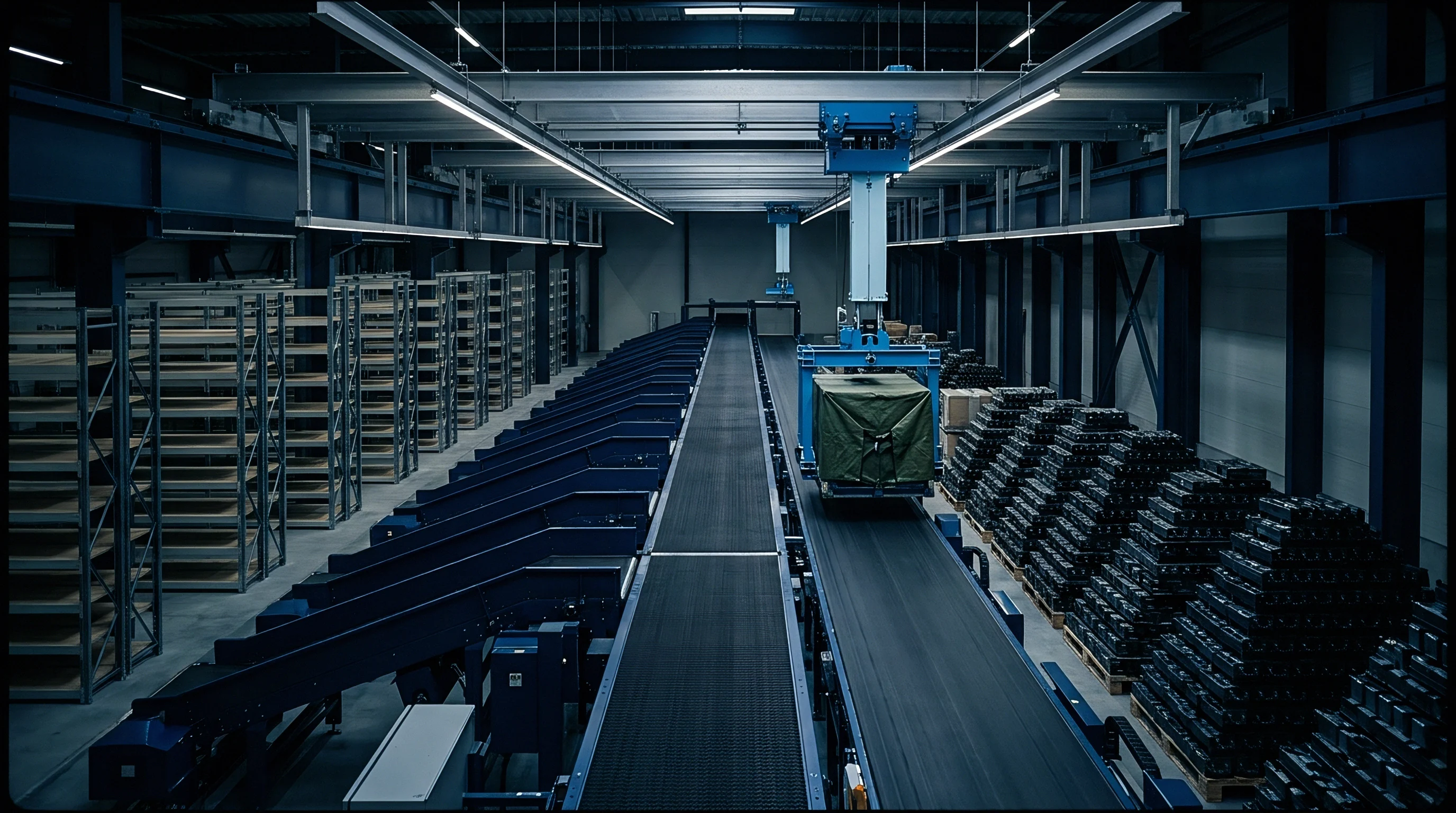
A shipment that fails random sampling at the receiving dock goes straight into quarantine. Warehouse crews move the suspect pallets to a segregated holding area to keep them off the active floor. The quality team has forty-eight hours to deliver written notification with dimensional reports and defect photos.
Importers cannot afford long waits when line-down penalties run thousands of dollars per hour; if the exporter stalls on authorizing containment, the buyer steps in and sorts the inventory unilaterally.
Isolating bad parts at the destination is always more expensive than verifying quality at the origin before the bill of lading is signed.
Sorting at the receiving dock keeps defect batches from migrating into downstream sub-assemblies. Cost allocation for that containment follows the initial supply contract.
- sorting labor liability escalates when incoming inspection data is poorly documented, making cost recovery impossible.
- sorting labor charges are triggered by damaged pallet shrink-wrap that exposes products to moisture.
- sorting labor remains the only viable alternative when production delays prevent a total shipment rejection.
Transit vibration during maritime shipping often conflicts with factory end-of-line quality controls when assigning defect origins.
Arithmetic
Calculating sorting expense requires an established baseline wage for manual warehouse work. Consider a lot of ten thousand plastic injection-molded automotive fasteners with an agreed major defect tolerance of one percent. If receiving inspection turns up a five percent defect rate, five hundred nonconforming fasteners sit dispersed across twenty cartons.
Needing to keep assembly running, quality assigns three warehouse operators to screen the entire lot of ten thousand units. At a pace of sixty fasteners per minute, checking the batch takes approximately fifty-six hours of manual effort. At a standard regional warehouse labor rate of forty dollars per hour, the direct expense equals two thousand two hundred and forty dollars before administrative fees.
In many containment runs, the cost of sorting exceeds the purchase value of the scrapped components.
In automotive tier-one supply chains, sorting labor charges average eighty-five dollars per hour when executed under emergency containment protocols at the receiving assembly plant.
Total labor cost comes from multiplying logged operator hours by the contractually defined hourly rate. When purchase orders leave that rate unspecified, parties rely on regional warehousing wage indices to settle the debit note. Across most jurisdictions, these figures cover direct hourly wages while excluding standard benefits and payroll taxes.
| Cost Component | Sorting Option (USD) | Rejection and Return Option (USD) |
|---|---|---|
| Direct Labor Hours | 2,240 | 120 |
| Expedited Freight Fee | 0 | 1,800 |
| Production Downtime Cost | 0 | 5,000 |
| Administrative Processing | 150 | 350 |
| Total Recovery Cost | 2,390 | 7,270 |
Underestimating the expended hours for manual sorting results in severe margin erosion on the final product assembly.

Paperwork
A supplier quality agreement sets the legal and operational rules for recovering containment costs. The contract details hourly chargeback caps, mandatory notice windows, and the inspection documentation needed to support a claim. Without those clauses in place, recouping costs from an overseas vendor is difficult once invoices are paid.
The debit note serves as the primary accounting instrument, itemizing dates, batch codes, operator hours, and total sorting expenses. Once executed, the debit note offsets directly against the supplier’s outstanding accounts payable balance.
- sorting labor clauses in quality agreements should define the maximum hourly rates that a buyer is allowed to charge back.
- sorting labor rates are unenforceable unless they are backed by local labor market indices or regional salary data.
- sorting labor billing periods are constrained to a seventy-two hour window following defect discovery.
- sorting labor documentation is necessary to prove that the activity was executed by contract personnel rather than salaried managers.
Agreements also establish the escalation path when an exporter disputes a deduction. Defining baseline inspection speeds and operator qualifications prevents vendors from rejecting containment chargebacks out of hand. Under Standard Clause 14.2 of regional purchasing agreements, the full expense of secondary warehouse sorting shifts to the exporter whenever defect levels exceed the agreed tolerance.

Bench
Sorting requires a dedicated station equipped with task lighting, calipers, and go-no-go gauges so checks remain consistent. Setting up away from the receiving dock and the main line prevents cleared parts from mixing with suspect stock. Operators work from written defect boundaries with clear photos of pass-fail criteria.
A strict left-to-right bench layout helps prevent handling errors: uninspected cartons sit on the left, active parts are checked in the center, and accepted units are packed out on the right.
Under Section 2-601 of the Uniform Commercial Code, the buyer’s right of rejection is preserved if the seller’s tender fails in any respect, though sorting labor represents a practical compromise to prevent line stops.
The mechanical procedure demands precise execution to guarantee that no bad parts escape to assembly. A standard sequence provides the necessary control over the sorted inventory.
- Operators position the carton on the designated station and extract thirty units for the first-pass calibration check.
- Substandard units are placed into a red-labeled bin while conforming parts are repacked in the original clean carton.
- Workers count and log each rejected part on the daily tally sheet to generate the daily quality report.
- The supervisor signs off on the completed quantity before moving the cleared stock to the main assembly line.
Clear visual segregation remains the most effective defense against the accidental reintroduction of nonconforming items into active assembly lines.


Dispute
Vendors frequently challenge sorting chargebacks by targeting the efficiency of the inspection crew. Slower manual handling or inexperienced operators can stretch billed hours well beyond what the defect rate warrants. Establishing baseline sorting rates based on part dimensions, geometry, and test criteria helps head off those disagreements before the work starts.
Conflict also flares over whether initial gate samples fairly reflected the condition of the broader shipment.

How Is Sorting Efficiency Validated?
Validating sorting productivity comes down to tracking logged floor output against established time-study benchmarks. Grounding chargeback rates in recognized industrial engineering handbooks makes bills much harder to contest. Where disagreements stall settlement, both sides often call in an independent quality firm to run the containment activity and certify the logged hours.
| Part Classification | Average Sorting Rate (units/hour) | Supplier Allowance (units/hour) | Variance Penalty Charge (USD/hour) |
|---|---|---|---|
| Simple Fasteners | 3,600 | 4,000 | 15 |
| Strained Wire Harnesses | 120 | 150 | 45 |
| Printed Circuit Boards | 80 | 100 | 65 |
| Stamped Brackets | 1,200 | 1,500 | 25 |
Whether automated optical scanning will eventually replace manual inspection tables in high-volume distribution remains an open question.