Ocean Freight
Meaning ~ Maritime transport constitutes the contractually bound transit of commercial cargo by sea under a bill of lading, allocating risk between trading parties.


Carriage
Maritime transport is the contractual movement of cargo by sea under a bill of lading, dividing risk between shipper and carrier. Ocean freight itself covers only the port-to-port leg of the voyage, starting when the carrier takes control of the container at the origin terminal gate and ending once it is discharged and ready for collection at the destination port. Inland haulage from the factory to the export port ~ known as pre-carriage ~ is billed and managed separately.
The same applies to on-carriage, the final drayage leg from the import terminal to the receiver’s warehouse.
Under the FIATA Multimodal Bill of Lading, carrier liability is capped at two Special Drawing Rights per kilogram of gross weight. Any transit loss beyond that threshold falls entirely on the shipper’s cargo insurance policy.

Tariff
Container shipping rates combine a fixed base rate with floating surcharges that carriers adjust to absorb volatile overheads. Rather than renegotiating annual contracts whenever fuel prices or exchange rates shift, lines use these surcharges to balance their revenue on short notice.
- ocean freight base rates are set per container size, giving a baseline price that excludes destination handling.
- ocean freight bunker surcharges offset marine fuel fluctuations based on current Rotterdam or Singapore benchmarks.
- ocean freight peak season surcharges kick in during late summer as holiday inventory fills up port terminals.
| Surcharge Code | Fee Description | Typical Rate per FEU | Adjustment Frequency |
|---|---|---|---|
| BAF | Bunker Adjustment Factor (Fuel Surcharge) | $600 to $1,200 | Monthly |
| CAF | Currency Adjustment Factor | 3% to 6% of Base Rate | Quarterly |
| PSS | Peak Season Surcharge | $300 to $800 | Seasonal (Aug to Nov) |
| THC | Terminal Handling Charges (Origin/Destination) | $200 to $500 | Annual Revision |
These surcharges are where carriers protect their operating margins. Because initial quotes frequently omit them, buyers face unexpected invoices if they fail to confirm all-in pricing before cargo is dispatched.
Unforeseen regional equipment imbalances and weather-related berth congestion are frequently cited to justify immediate emergency equipment repositioning surcharges.

Lading
As a receipt for cargo, evidence of the carriage contract, and a document of title, the bill of lading is the core legal instrument in international trade. Signed by the carrier or an authorized agent, it governs the entire ocean voyage. Whichever party holds the physical original retains the legal right to claim the shipment at discharge, making release without its presentation a major legal risk.
Under Clause 3 of the standard booking terms, the carrier’s release of the cargo without presentation of the original bill of lading renders the carrier liable for the full commercial invoice value of the shipment.
Three Roles of the Legal Bill
Carriers issue bills as either straight or negotiable order documents. A straight bill names a specific consignee and cannot be transferred, whereas an order bill allows ownership of the goods to be assigned by endorsement while the vessel is en route.
- ocean freight bills of lading provide a binding receipt that protects buyers against pre-shipment cargo loss.
- ocean freight transport contracts establish the legal framework defining where carrier custody starts.
- ocean freight carrier liability under Hague-Visby rules is calculated per package or per kilogram.
Failure to secure original paper documents before vessel arrival results in port holds, accumulating storage fees, and eventual cargo forfeiture to customs.

Dock
Terminal operations at port gateways handle the transfer of containers from ship deck to ground storage. How efficiently this transfer happens determines whether a drayage trucker can pick up the container before overstay penalties begin accruing at these often-congested hubs.

Who Pays the Demurrage When Ports Congest?
Once free time runs out, the importer is responsible for terminal demurrage ~ even when delays are caused by carrier paperwork errors, customs inspections, or terminal gate closures.
Demurrage charges on a standard forty-foot dry container at major North American ports typically escalate from one hundred and fifty dollars to over four hundred dollars per day after the fifth day of free time.
Industry disputes continue over whether carrier-owned terminal operators can legally impose congestion surcharges when their own vessel scheduling causes the backlog.

Crate
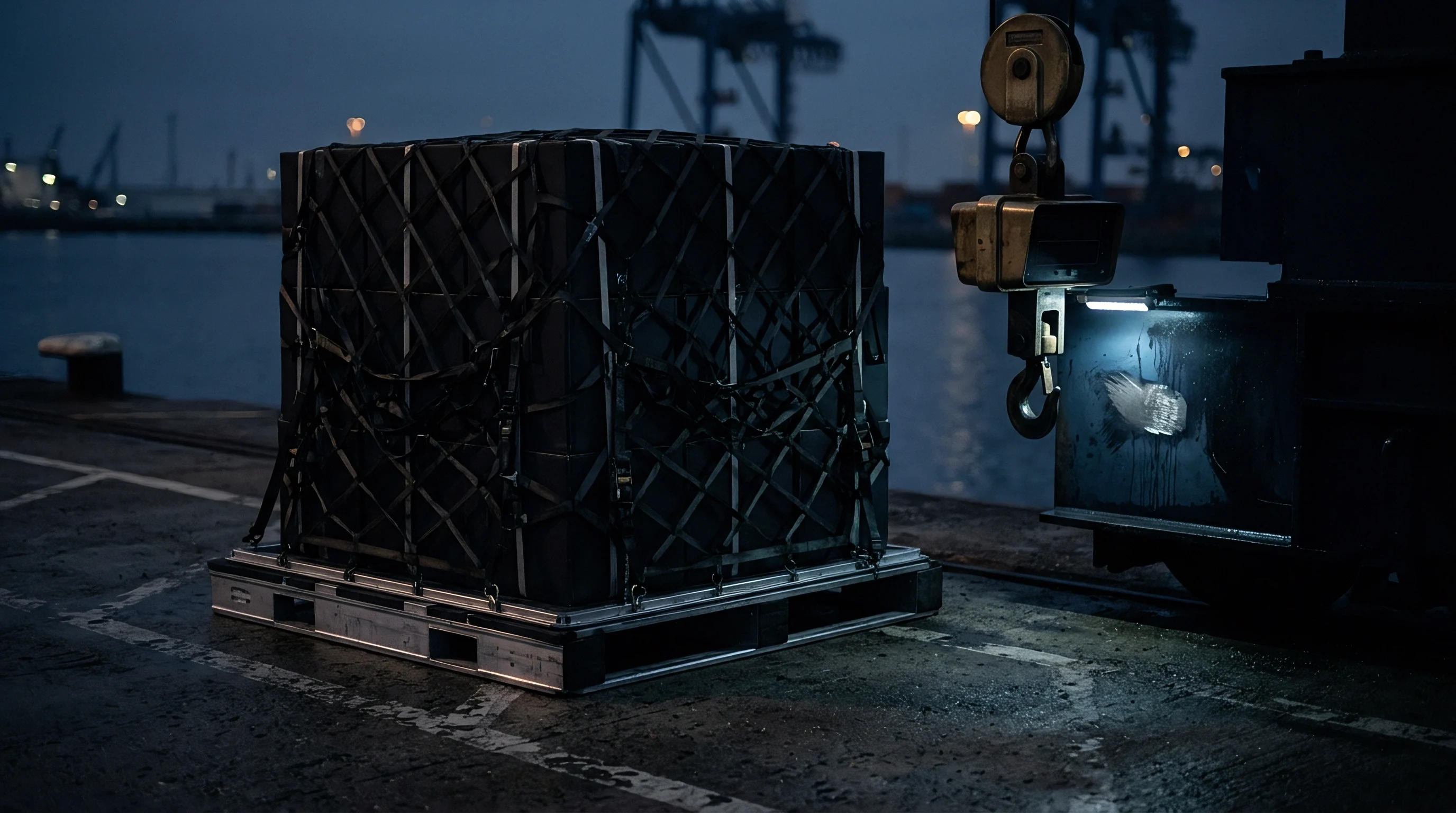
Proper cargo packing ensures individual packages survive the constant pitching, rolling, and vibration of an ocean voyage. In addition to physical movement, containerized freight faces high humidity and temperature shifts, which cause moisture to condense on cold interior steel walls ~ a condition known as container sweat.
Preventing Condensation in Stuffed Containers
Preventing moisture and shift damage is critical during container loading. A structured packing pattern stabilizes pallets on the factory floor, preventing heavy items from crushing lighter wooden crates.
- Inspect the empty metal container for structural cracks or floor leaks before stuffing.
- Line interior walls with industrial barrier foil to shield cargo from rising moisture.
- Secure dry clay desiccant bags to upper lashing points to absorb ambient humidity.
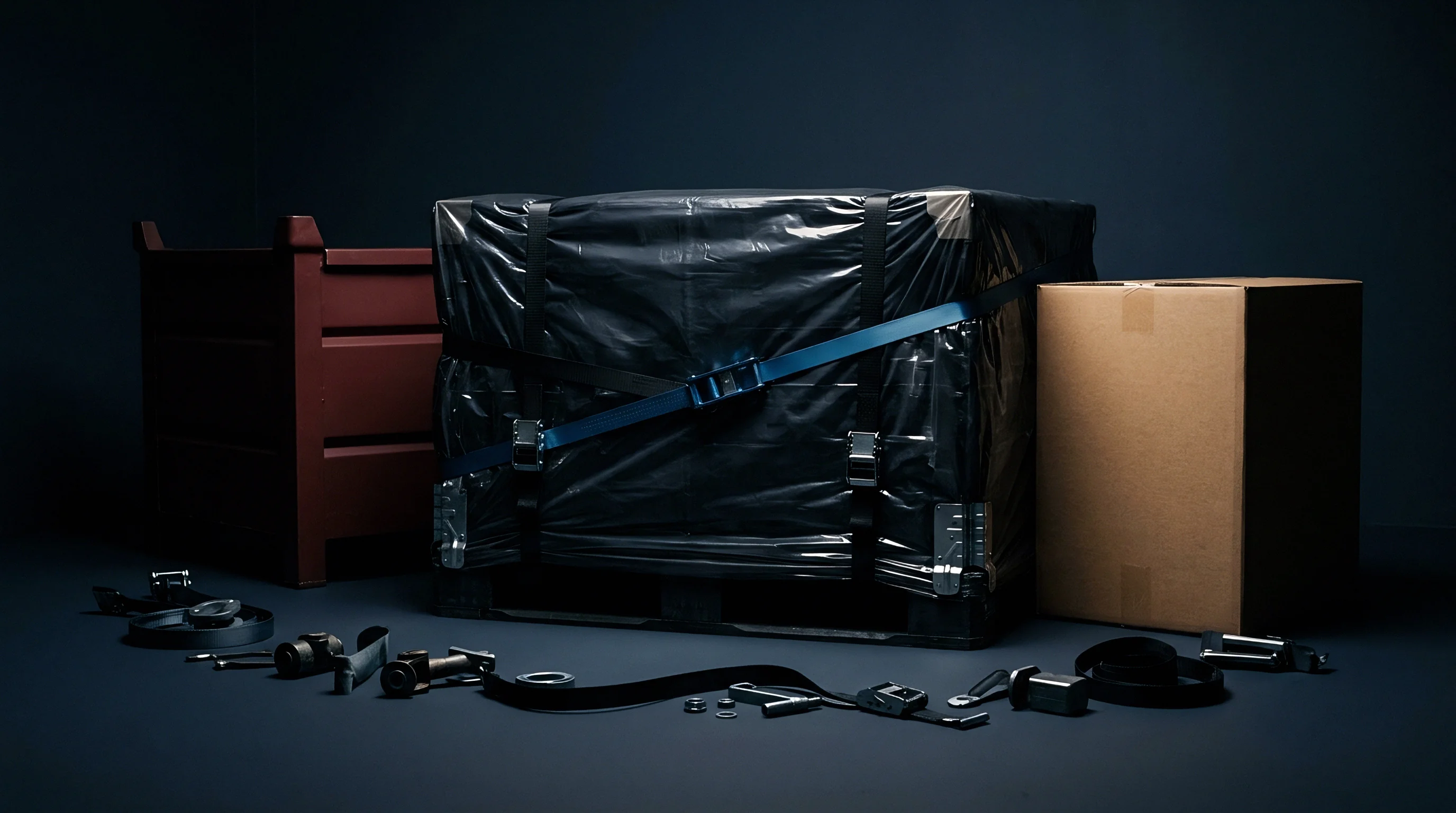
- Brace heavy pallet structures with inflatable dunnage bags to prevent lateral movement.
- Attach a high-security seal to locked doors and log the serialized seal number.
Dunnage bags inflated to the incorrect pressure will shift during rough seas, causing the entire wood-braced pallet structure to collapse against the container doors.
If timber used for internal bracing has a high moisture content, heat during equatorial transit will cause that water to evaporate, condense on the container ceiling, and drip back onto the cargo.

Ledger
Landed cost calculations for import shipments must reconcile initial freight quotes with final actual expenses. Evaluating Full Container Load against Less than Container Load options requires comparing ancillary port and handling fees alongside base ocean freight, as quotes seldom reflect the final total.
For example, an 18-cubic-meter shipment of stainless steel fasteners moving from Shanghai to Los Angeles quoted at a Less than Container Load rate of $120 per cubic meter carries a base freight cost of $2,160, compared to $2,800 for a 20-foot dry container. While the base rate makes LCL appear cheaper, factoring in origin and destination container freight station fees, terminal handling, and local drayage alters the final financial comparison.
| Cost Category | FCL Option (20ft Dry Container) | LCL Option (18 CBM Consolidation) |
|---|---|---|
| Base Freight Cost | $2,800.00 | $2,160.00 ($120 per CBM) |
| Origin CFS Fee | $0.00 | $450.00 ($25 per CBM) |
| Destination CFS Fee | $0.00 | $630.00 ($35 per CBM) |
| Terminal Handling Charges | $350.00 | $180.00 |
| Local Port Drayage | $650.00 | $450.00 |
| Total Surcharges | $400.00 | $270.00 |
| Calculated Landed Freight | $4,200.00 | $4,140.00 |
| Data represents standard tariff rates in early 2026 and excludes potential customs clearance and inspection fees. | ||
Auditing the final landed cost sheet allows importers to identify and dispute any unauthorized or duplicate forwarder charges prior to settling the invoice.