Lot Size
Meaning ~ Manufacturing lot size defines the total quantity of a specific item produced or shipped together under identical manufacturing and quality inspection parameters.


Batch
Manufacturing volume, formally designated as lot size, is the exact count of identical units produced under uniform conditions in a single uninterrupted run, or grouped for a discrete inspection and shipping cycle.
This metric serves as the basic unit of analysis for quality assurance engineers, supply chain directors, and trade finance officers negotiating sales terms. It sets the boundaries for tracing defects, amortizing production costs, and verifying contractual tolerances. In international trade, run volume determines how a batch of raw chemicals, forged steel brackets, or molded plastic casings moves from the mixer to the cargo hold.
It anchors the purchase order, establishing the precise quantity a factory runs in one sequence. When a buyer orders fifty thousand brass valves, the factory rarely makes them in a single run. Instead, daily machine capacity, shift changes, or material availability force the plant to break the order into smaller runs.
That choice of run volume directly affects the statistical reliability of quality certificates and dictates the buyer’s financial risk if a systemic tooling defect hits the line.

Commercial Boundaries of Production Units
Moving from a continuous material feed to discrete batches establishes the contractual definition of a production unit. In process-driven industries like polymer extrusion or steel stamping, lot boundaries depend on raw material mixer capacity or coil weight. A batch of plastic injection-molded housings, for instance, is tied to the specific resin lot poured into the machine hopper.
If a supplier switches resin lots mid-run, the chemical properties of the housings can drift, requiring the plant to treat the parts made before and after the change as two distinct lots. Factories sometimes attempt to combine products from different production weeks into a single shipping lot to meet a delivery deadline. This practice breaks the baseline assumption of homogeneity behind international quality standards.
If a defect turns up in one part of that combined batch, the buyer has to reject the whole shipment because trace data won’t let them isolate the bad units. The commercial contract should therefore define run boundaries explicitly, specifying that each run must use the same mold, identical machine settings, and raw material from a single supplier batch.

Sequence and Timing Constraints
Production cycle duration and shift timing directly affect part uniformity. Operators recalibrate settings at shift changes, while industrial oven heating elements drift in temperature over hours of continuous work. In manufacturing ceramic capacitors or silicone gaskets, lot sizes are often capped by the daily capacity of the curing ovens.
Splitting runs into smaller batches mitigates thermal drift, ensuring tighter consistency across the product line. Suppliers, by contrast, favor larger runs to avoid the downtime of cleaning equipment between setups. When a buyer caps lot size in a contract, they tighten the window between the first and last unit produced.
That constraint stops factories from mixing early setup parts with mass-production units or using leftover material from earlier jobs to round out an order. Restricting batch sizes to what can be produced within a single work week also caps cumulative wear on stamping dies and cutting tools, preventing dimensional drift across the run.
Whether a supplier will split raw material procurement for smaller runs without adding heavy surcharges remains a point of friction that requires firm negotiation during the RFQ stage.


Tooling
Machinery setup times and continuous run hours govern the minimum order volumes suppliers require to recover high upfront costs.
Preparing a production line ~ installing custom dies, mounting heavy molds, loading program files, and preheating ovens ~ demands significant technician labor and downtime. These setup costs are fixed, so they must be spread across whatever quantity is produced. Set the lot size too low, and amortized setup fees push the unit price out of reach.
In high-precision sheet metal stamping, mounting a multi-stage progressive die takes four hours of technician work while the press sits idle. On a run of one thousand units, several hundred dollars in setup labor adds a heavy cost per part. Bump that run to twenty-five thousand units, and the setup charge dilutes to near-zero on the unit cost sheet.
Factories use these amortized savings to pitch volume discounts, steering buyers toward larger batches. Checking break-even points on the cost sheet prevents ordering excess inventory just to hit a lower unit price that gets eaten up by storage fees.

Amortization of Machinery Setup Expenses
The mathematical link between setup labor and batch volume shows why factories insist on strict minimum order quantities for custom components. The cost structure for a custom-molded silicone keyboard housing illustrates this balance, based on a five-thousand-dollar fixed setup fee and a variable material and processing cost of two dollars and fifty cents per unit. Higher volumes drop the initial setup fee’s impact on unit price rapidly, reinforcing the supplier’s preference for long production runs.
| Lot Size (Units) | Fixed Setup Cost (USD) | Amortized Setup (USD/Unit) | Variable Processing Cost (USD) | Total Unit Cost (USD) |
|---|---|---|---|---|
| 1,000 | 5,000 | 5.00 | 2.50 | 7.50 |
| 2,500 | 5,000 | 2.00 | 2.50 | 4.50 |
| 5,000 | 5,000 | 1.00 | 2.50 | 3.50 |
| 10,000 | 5,000 | 0.50 | 2.50 | 3.00 |
| 25,000 | 5,000 | 0.20 | 2.50 | 2.70 |
| Methods Note: Fixed setup fee includes mold installation and line calibration labor. | Calculated at standard factory rates for 2026. | |||
Increasing a run from one thousand to five thousand units cuts total unit cost by over fifty percent. Past ten thousand units, though, cost reductions flatten out, yielding diminishing returns on setup amortization. Buying twenty-five thousand parts to save thirty cents each is rarely worth it if those units sit in a warehouse for a year, racking up carrying costs and risking degradation.
A production run of twenty thousand units achieves a eighty-eight percent reduction in amortized setup charges compared to a run of one thousand units.

Production Run Comparative Economics
Evaluating setup efficiency against market flexibility is critical when buying custom parts. Large batches tie up equipment and delay other jobs. If a buyer updates a design to fix an issue, holding massive inventory of the old revision forces a heavy write-off.
Smaller runs let buyers iterate based on field feedback. That agility matters in fast-moving sectors like consumer electronics, where product designs can go obsolete in six months. A cost analysis should weigh setup savings against the risk of scrapping dead inventory.
Suppliers resist this logic because they care about daily machine utilization rather than buyer inventory risk. A practical middle ground is paying a separate, unbundled setup fee for smaller runs rather than rolling configuration costs into unit pricing.
When evaluating price breaks, a buyer must weigh the per-unit savings of larger runs against carrying costs and the risk of design obsolescence.


Transit
Freight efficiency depends on fitting order quantities to the physical dimensions of pallets, crates, and container weight limits.
Cross-border shipping costs depend directly on how production lots map to container space. Ordering a quantity that leaves partial pallets ~ or a pallet count that doesn’t fill a container ~ means paying to transport empty air. That waste adds up quickly in ocean freight, where a standard forty-foot dry van carries a flat box rate regardless of load factor.
If a master carton fits eighty to a standard wooden pallet, the order should be a multiple of eighty. Ordering one thousand cartons leaves twelve full pallets and one loose pallet of forty. That partial pallet needs special handling, can’t be stacked easily, and risks shifting in transit.
Matching order quantities to full-pallet increments prevents cargo damage and simplifies receiving operations.

Container Loading and Volumetric Efficiency
Container dimensions mean production runs should be planned around spatial geometry. A twenty-foot container holds ten standard industrial pallets (one hundred by one hundred twenty centimeters), while a forty-foot container fits twenty-one. Ordering outside these multiples wastes container volume, raising landed costs per unit.
Unused space can also trigger delays, as customs officials flag partially loaded containers for physical inspection more often. The breakdown below shows how three order sizes for a consumer appliance impact container space and freight costs in a forty-foot box.
| Lot Size (Cartons) | Pallets Required | Pallet Space Utilization (%) | Ocean Freight Cost (USD) | Freight Cost per Unit (USD) |
|---|---|---|---|---|
| 800 | 10 | 47.6 | 4,500 | 5.63 |
| 1,400 | 18 | 85.7 | 4,500 | 3.21 |
| 1,680 | 21 | 100.0 | 4,500 | 2.68 |
An order of eight hundred cartons uses less than half of a container, pushing unit freight costs to five dollars and sixty-three cents. Expanding the batch to sixteen hundred eighty cartons fills the container completely and cuts per-unit shipping costs by more than half. Those savings go straight to product margin, which is why logistics teams should be involved when setting production lot sizes.
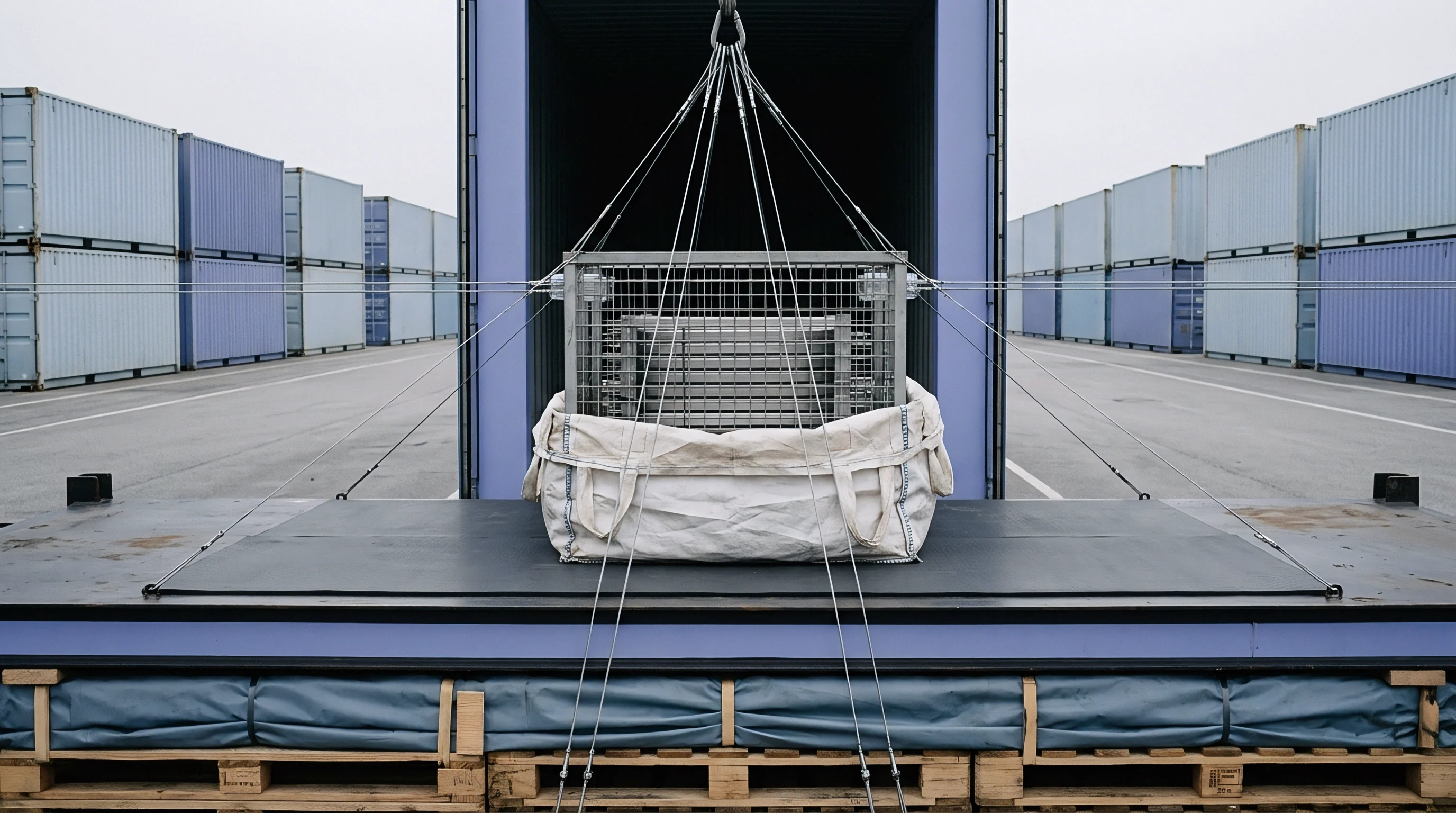
Palletization and Consolidation Metrics
Preparing goods for export requires systematic planning to keep cargo secure and freight costs down. Establishing a standard review process ensures order quantities are optimized before purchase orders go out to the factory.
- Measure exterior master carton dimensions and verify standard pallet load limits.
- Map the carton layout on the pallet footprint to maximize coverage and prevent overhang.
- Multiply cartons per tier by safe stacking height to set full-pallet quantities.
- Adjust purchase order totals to full-pallet multiples to eliminate loose boxes and reduce transit damage.
This structure keeps factory packing consistent and prevents loose cartons from shifting at sea. It also speeds up receiving at destination warehouses, where staff can count full pallet loads instead of loose boxes. Clear palletization rules reduce packing errors and simplify floor logistics for the factory.
Packing an order of glass vials onto half-empty pallets forces a freight surcharge write-off when order volume is set without analyzing the volumetric limits of a shipping container.


Audit
Acceptance sampling uses statistical probability tables to set the required inspection sample size for a given production run.
Quality inspection statistics depend entirely on lot size. International standards like ISO 2859-1 and ANSI/ASQ Z1.4 use total batch size to assign a sample size code letter, which dictates how many units an inspector must pull for an accept-or-reject decision. Larger runs require larger sample sizes, adding inspection time and labor costs.
In return, bigger samples give stronger statistical confidence that defect rates stay within the agreed Acceptable Quality Limit. If a factory splits a single run into smaller sub-batches to hurry production along, inspectors must evaluate each lot separately. That drives up total inspection fees while weakening the statistical sensitivity of each test, making it easier for systemic defects to slip through.
Insisting that the factory presents goods for inspection in large, uniform lots protects statistical validity and avoids paying for redundant inspection visits.

The Statistical Mechanics of Attribute Sampling
Sampling standards rely on operating characteristic curves to link lot size, sample volume, and acceptance limits. Under a General Inspection Level II plan with an AQL of one point five percent for major defects, a five-hundred-unit batch calls for fifty samples (Code Letter H). The lot passes with one defect but fails if two are found.
Expand that batch to five thousand units, and the requirement jumps to two hundred samples (Code Letter L) with an acceptance limit of seven. That broader sample increases test sensitivity, lowering the buyer’s risk of accepting sub-standard goods. While suppliers often favor smaller lots to avoid wholesale rejections, quality managers want larger, uniform batches to ensure statistical rigor.
Section 4 of the ISO 2859-1 standard binds the manufacturer to submit products in distinct, identifiable batches for statistical inspection to prevent hidden defect clusters.

Standard Sampling Code Letter Matrix
Batch size directly dictates inspection intensity under ISO 2859-1 single sampling for normal inspection at an AQL of one point five percent. As batch volume grows, sample requirements and allowed defect thresholds adjust to maintain buyer protection.
| Lot Size Range | Sample Size Code Letter | Sample Size (Units) | Acceptance Number (Ac) | Rejection Number (Re) |
|---|---|---|---|---|
| 151 to 280 | G | 32 | 1 | 2 |
| 281 to 500 | H | 50 | 1 | 2 |
| 501 to 1,200 | J | 80 | 2 | 3 |
| 1,201 to 3,200 | K | 125 | 3 | 4 |
| 3,201 to 10,000 | L | 200 | 5 | 6 |
| 10,001 to 35,000 | M | 315 | 7 | 8 |
For a lot of twelve hundred units, an inspector pulls eighty samples and accepts the batch if no more than two defects appear. If the lot expands to thirty-five thousand units, the sample size increases to three hundred fifteen units with an acceptance ceiling of seven. Even though the percentage of inspected parts drops from six point seven percent to under one percent, statistical reliability actually improves because the absolute sample size is much larger.

Quality Failures and Sampling Errors
Non-uniform production runs or supplier-selected samples undermine the entire sampling protocol. Inspectors must draw units randomly across all pallet layers ~ top, middle, and bottom. If a factory presents an incomplete batch, claiming remaining parts are identical, inspection must stop.
Sampling an unfinished lot lets non-conforming parts slip through in unproduced quantities. When samples are drawn from a single, poorly manufactured pallet, statistical standards still treat the selected units as representative of the full batch, leaving the supplier responsible for sorting and rework costs.
Maintaining tight tooling tolerances often requires running at least fifty thousand units uninterrupted.


Ledger
Balance sheets and working capital depend heavily on how fast inventory turns back into cash.
Production lot sizes directly dictate how much working capital gets tied up in raw materials, WIP, and finished inventory. Agreeing to large minimum order quantities forces upfront cash outlays months before sales generate revenue. That lengthened cash-conversion cycle carries real costs, especially during high interest rates or tight credit.
If a buyer orders fifty thousand units of a component selling at five thousand units a month, they are tying up cash in ten months of stock. That inventory incurs storage fees and carrying charges that bleed off margin. Negotiating a run down to ten thousand units drops holding requirements to two months, freeing capital and cutting warehouse expense.

Purchase Orders and Payment Terms
Contracts should align payment terms with manufacturing schedules to protect cash flow. When suppliers demand thirty percent down and seventy percent before vessel departure, large lot sizes freeze significant cash early on. A three-month production run locks up deposit funds for ninety days before products generate income.
Staggering smaller lot sizes lets buyers space out cash payments to match revenue streams. Rather than placing one purchase order for thirty thousand units, a buyer can issue three orders of ten thousand units on staggered delivery dates. That lowers cash deposit requirements and lets the buyer verify quality on batch one before advancing deposits on batch two.
Squeezing batch volume below the daily capacity of the machinery drives up the average defect rate due to frequent calibration shifts.

Minimum Order Quantities and Capital Lockup
Calculating capital lockup costs requires factoring in interest rates, unit prices, and holding duration. Consider a scenario where an importer purchases a specialized electronic sensor with a unit price of twenty dollars and an annual cost of capital of eight percent. If the supplier enforces a minimum order quantity of twenty thousand units, total inventory value is four hundred thousand dollars.
If monthly sales volume is two thousand units, it takes ten months to sell through the batch. The average inventory held over this period is ten thousand units, representing two hundred thousand dollars of locked-up capital. Over ten months, the cost of capital on this average inventory is ten thousand six hundred sixty-seven dollars ~ a hidden surcharge of fifty-three cents on every unit sold.
If the importer negotiates a smaller lot size of five thousand units, average inventory value drops to fifty thousand dollars, and capital costs fall to two thousand six hundred sixty-seven dollars, showing the clear financial benefit of smaller, more frequent runs.
Clause 14 of the standard supply agreement protects the buyer by making the factory solely responsible for storage and demurrage fees if they split a single purchase order into multiple smaller shipments without prior written consent.


Salvage
Remediation protocols dictate how buyers handle defective shipments that fail statistical quality thresholds.
When a lot fails inspection at the port of destination, both sides face immediate financial exposure. The importer cannot release non-conforming goods to customers, while the supplier faces freight, sorting, and rework bills. Shipping defective cargo back overseas often costs more than the inventory itself, making clear batch-salvage terms essential.
On a failed batch of twenty thousand units, manual sorting at a local third-party warehouse easily reaches tens of thousands of dollars. Smaller failed lots are faster and cheaper to sort, allowing compliant parts to be recovered quickly. That potential sorting liability is a major reason to keep production runs as compact as operational economics allow.
Suppliers frequently resist batch reduction because frequent line changeovers cut their total weekly machine output.

Defective Run Processing and Liabilities
Liability terms for rejected lots must be established in the supply contract before issuing purchase orders. When an inspection fails, the supplier should have the right to rework or replace non-conforming goods, but entirely at their own cost ~ including freight, labor, and warehouse fees. If stockouts threaten line shutdowns, the buyer may have to sort the lot locally to extract usable parts.
In those scenarios, the supplier must reimburse sorting costs, typically via invoice deduction. Standard purchase contracts include a sorting chargeback clause with a fixed hourly labor rate, extending supplier liability beyond component value to cover direct damages from supply chain disruptions. Mismanaging lot boundaries and liability terms during salvage operations leads to several key failure modes:
- Lot Size inflation increases the odds that a systemic defect ruins an entire shipment.
- Lot Size reductions below Code Letter J compromise the statistical reliability of inspections.
- Lot Size mismatches between purchase orders and actual inspection lots create customs compliance issues.
- Lot Size fragmentation breaks continuous heating cycles, causing inconsistent material density.
Setting run volumes is as much about risk management as plant economics. Aligning production runs with statistical inspection levels contains quality failures within manageable volumes, capping financial exposure and simplifying salvage.
Once rework is finished, inspectors re-test the sorted lot. The factory pays for the re-audit, creating a direct financial incentive to maintain strict process controls from the start of production.

Balance
Importers gain structural advantages by negotiating order volumes that fit their quality control capacity and warehouse space limits.
Optimizing order volume means balancing competing demands across manufacturing, logistics, quality control, and finance. Suppliers push for long runs to maximize machine efficiency. Freight forwarders want full containers to simplify shipping and lower freight rates.
Quality managers demand manageable, distinct lots to preserve statistical sampling integrity. Finance directors push for smaller, frequent orders to keep working capital liquid. An effective sourcing manager balances these trade-offs to minimize landed cost while holding supply chain risk to acceptable levels ~ a process requiring insight into factory economics, container geometry, and sampling standards.

Negotiating Lot Boundaries with Suppliers
To reach an acceptable compromise, importers should separate production run sizes from shipping release schedules. A factory might run fifty thousand units in one go for setup efficiency if the buyer covers material costs upfront. But those fifty thousand units don’t have to ship together.
The plant can store finished inventory and release ten thousand units every month over five months. The factory gets its run efficiency, while the buyer gains staggered freight and duty expenses, reduced warehouse fees, and a shorter cash-conversion cycle. Inspectors test each ten-thousand-unit release prior to export, catching tooling wear or process drift before the full volume leaves the country.

How Does Lot Size Alter Sourcing Risk?
The biggest risk of large batch volumes is concentrated quality failure. If a tooling fault hits at the start of a thirty-thousand-unit run, all thirty thousand parts are scrap. If that order is split into three ten-thousand-unit runs and inspected after the first batch, the plant can fix the tool before starting run two.
That cuts non-conforming inventory from thirty thousand to ten thousand units, saving the supplier massive rework costs and keeping retail stock flowing. Sourcing teams must factor this containment value into unit-cost negotiations, balancing the slightly higher price of smaller runs against the cost of a systemic failure across a single massive lot. Key factors to evaluate when setting run boundaries include:
- Lot Size parameters must align with the daily throughput of secondary processing equipment to maintain material consistency.
- Lot Size inflation beyond single-container capacities risks split shipments and customs delays.
- Lot Size limits should be written into contracts as binding terms to stop factories from merging separate orders.
- Lot Size adjustments require written authorization to ensure inspectors apply the appropriate sampling plan.
These controls help sourcing teams stay disciplined on order sizing, protecting margins and product quality. Leveraging trade logistics and statistical standards builds a more flexible, resilient supply chain.