Cargo Insurance
Meaning ~ Commercial indemnity contracts designed for maritime and international transport protect the owner of goods against physical loss or damage during transit.
Origin
Commercial indemnity contracts structured for maritime and international transport protect the owner of goods against physical loss or damage during transit between the dispatch warehouse and the final delivery point.
In international supply chains, cargo insurance serves as the primary instrument that closes the gap between carrier liability limits, such as those defined by the Hague-Visby Rules for sea freight or the Montreal Convention for air freight, and the actual replacement value of the shipment. Carrier liability does not cover most losses. While carrier liability caps often hover at a small fraction of modern commercial product value, a dedicated transit policy covers the financial interest of the buyer or seller throughout the journey.
Coverage typically attaches from the moment the goods leave the storage facility to start the transit and terminates upon arrival at the consignee’s warehouse. Insurers define the risk transition points.

Contractual Boundaries and Attachment Points
The boundary where this protection applies is defined by both the chosen Incoterms and the specific warehouse-to-warehouse clause in the policy document. Buyers are required to recognize that risk transfer under the sales contract does not always align with the commencement of the insurance coverage. Under Free on Board terms, the seller carries the risk of loss until the goods are loaded onto the vessel, whereas the buyer’s insurance policy often attaches when the goods leave the seller’s factory.
This mismatch can create a gap where damage occurs during domestic pre-carriage, leaving the buyer holding goods that are damaged but not yet covered by their own policy. Standard transit coverage eliminates these blind spots by using clear extension clauses that trace the physical movement of the cargo.
Clause 19 of the standard transit insurance terms eliminates automatic cover for overland legs that exceed sixty days from the time of vessel discharge.
Premium
The cost of ocean-transit coverage is calculated on the commercial invoice value and the freight fee.
Underwriters use the Cost, Insurance, and Freight (CIF) value as the baseline for their calculations. In practice, the industry adds a ten percent markup to this value to cover unseen expenses, customs duties, and potential administrative costs during a claim process. Deductibles reduce the premium paid.
This structure is known as the 110 percent valuation rule. Air freight carries lower insurance rates. To calculate the premium, the underwriter applies a specific rate, usually between 0.15 and 0.55 percent, to the total insured value.
This rate fluctuates based on the destination route, the commodity type, and the history of claims associated with the shipper.
Landed Cost Arithmetic
To demonstrate the calculation, assume a shipment of stainless steel valves holds a commercial invoice value of 80,000 USD. The ocean freight charges are 4,000 USD, and the rate quoted by the insurer is 0.25 percent under Clause A terms. This example assumes a standard voyage.
The insured value is calculated by taking the sum of the invoice and freight values, which is 84,000 USD, and multiplying it by 1.10, yielding 92,400 USD. Applying the 0.25 percent rate to this insured value results in a premium of 231 USD. This small expense secures the full replacement value of the goods, which would otherwise be exposed to the statutory carrier limits of approximately 2 SDR per kilogram under maritime law.
| Commodity Class | Base Premium Rate (%) | Standard Valuation Option | Inherent Risk Level |
|---|---|---|---|
| General Cargo and Machinery | 0.15 – 0.25 | CIF + 10% | Low |
| Textiles and Apparel | 0.20 – 0.35 | CIF + 10% | Moderate |
| Consumer Electronics | 0.30 – 0.55 | CIF + 10% | High |
| Industrial Glassware | 0.45 – 0.75 | CIF + 20% | Very High |
| Rates represent typical industry averages for transoceanic lanes excluding war risk zones. | |||
Standard commercial shipments pay a premium of 0.25 percent of the total CIF value under Clause A terms.
- Cargo insurance rates reflect the susceptibility of the specific material to damage, with electronics commanding higher percentages than bulk agricultural products.
- Cargo insurance underwriters calculate the final premium on the total insured value, which is usually determined by adding ten percent to the Cost, Insurance, and Freight value.
- Cargo insurance deductibles establish the baseline loss that the buyer agrees to pay before the policy pays any recovery for a damaged shipment.
The resulting figure constitutes the total cash outflow for policy issuance, which becomes a direct line item on the land-cost calculation sheet.
Risk
Underwriters categorize the levels of exposure in maritime and overland shipments according to standard international formats.
These standardized coverage formats are managed by the Joint Cargo Committee and are known globally as the Institute Cargo Clauses. The three primary levels, Clauses A, B, and C, dictate the specific hazards covered during the journey. Clause A provides all-risks coverage, meaning any accidental loss is covered unless specifically excluded.
All risks coverage dominates commercial trade. Clause B and Clause C are named-perils policies, which cover only the specific events listed in the document. Clause C excludes theft entirely.
Recognizing the exact boundaries between these levels of protection prevents buyers from selecting inadequate policies that leave their shipments exposed to common transit hazards.

How Does Clause a Compare to Clause C?
While Clause A covers a wide range of perils including theft, fresh water damage, and rough handling, Clause C covers only catastrophic maritime events. Specifically, Clause C applies when the vessel sinks, burns, or collides, but it excludes moisture damage from sea water entering the hold or physical damage from rough container handling. When importing high-value manufactured products, Clause A represents the standard trade practice because it minimizes the buyer’s burden of proof in the event of damage.
Under Clause A, the buyer only has to show that damage occurred during transit, whereas under Clause B or C, the buyer has to prove that a specific, named peril caused the loss.
| Transit Peril | Clause A | Clause B | Clause C |
|---|---|---|---|
| Fire or Explosion | Covered | Covered | Covered |
| Stranding or Sinking | Covered | Covered | Covered |
| Jettison of Cargo | Covered | Covered | Covered |
| Entry of Sea or River Water | Covered | Covered | Excluded |
| Theft or Pilferage | Covered | Excluded | Excluded |
| Malicious Damage | Covered | Excluded | Excluded |
Incoterms 2020 rules for Cost, Insurance, and Freight require the seller to purchase at least the basic Clause C coverage for the voyage.
- Cargo insurance policies under the Institute Cargo Clauses (A) serve as all-risks protection, which shifts the burden of proof to the insurer to prove an exclusion.
- Cargo insurance options using Clause B cover a restricted set of perils, including earthquakes and washing overboard, but exclude general handling damage or theft.
- Cargo insurance under Clause C protects only against catastrophic vessel events, which means the shipper cannot recover losses for water damage from heavy seas.
A policy that covers theft and water ingress remains more economical than depending on the standard liability limits of an international ocean carrier.
Swell
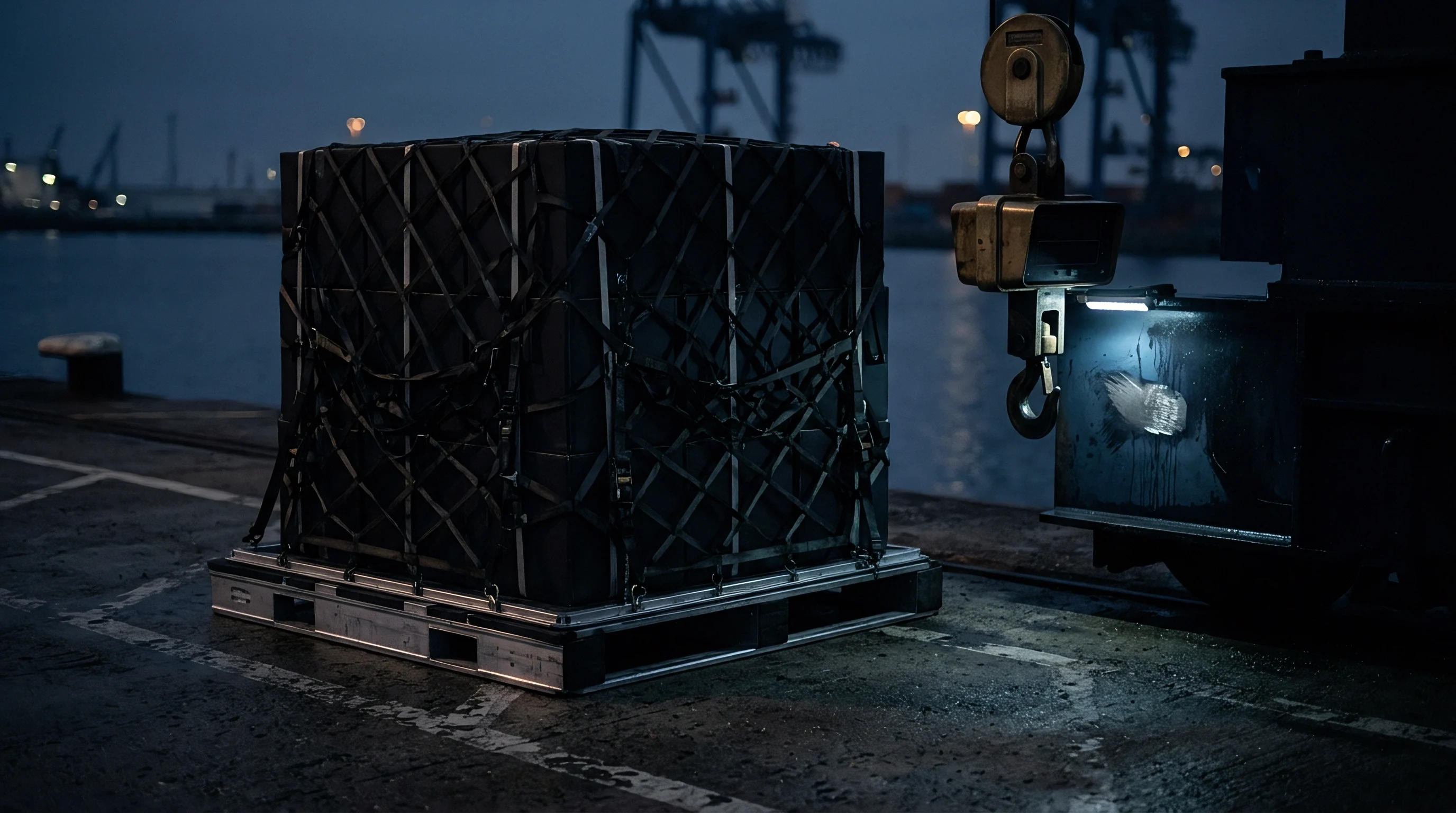
Moisture accumulation inside a steel shipping container triggers severe structural deformation of packaging and physical degradation of organic materials.
This environmental hazard, often referred to as container rain, occurs when moisture-laden air inside the container cools below its dew point, causing water to condense on the steel ceiling and drip onto the cargo. Cardboard collapses when wet. Cardboard boxes absorb this moisture, losing their structural strength and collapsing under the weight of the stacked pallets.
Desiccants absorb excess container moisture. For agricultural goods or wood products, the resulting moisture absorption leads to swelling, mold growth, and rotting, which can render the entire shipment unusable. When a container is opened on the loading dock, and the investigator observes wet, swollen, and distorted packaging, the insurer will immediately look at the packaging specification and the shipping conditions to determine liability.
Inherent Vice and the Packaging Exclusion
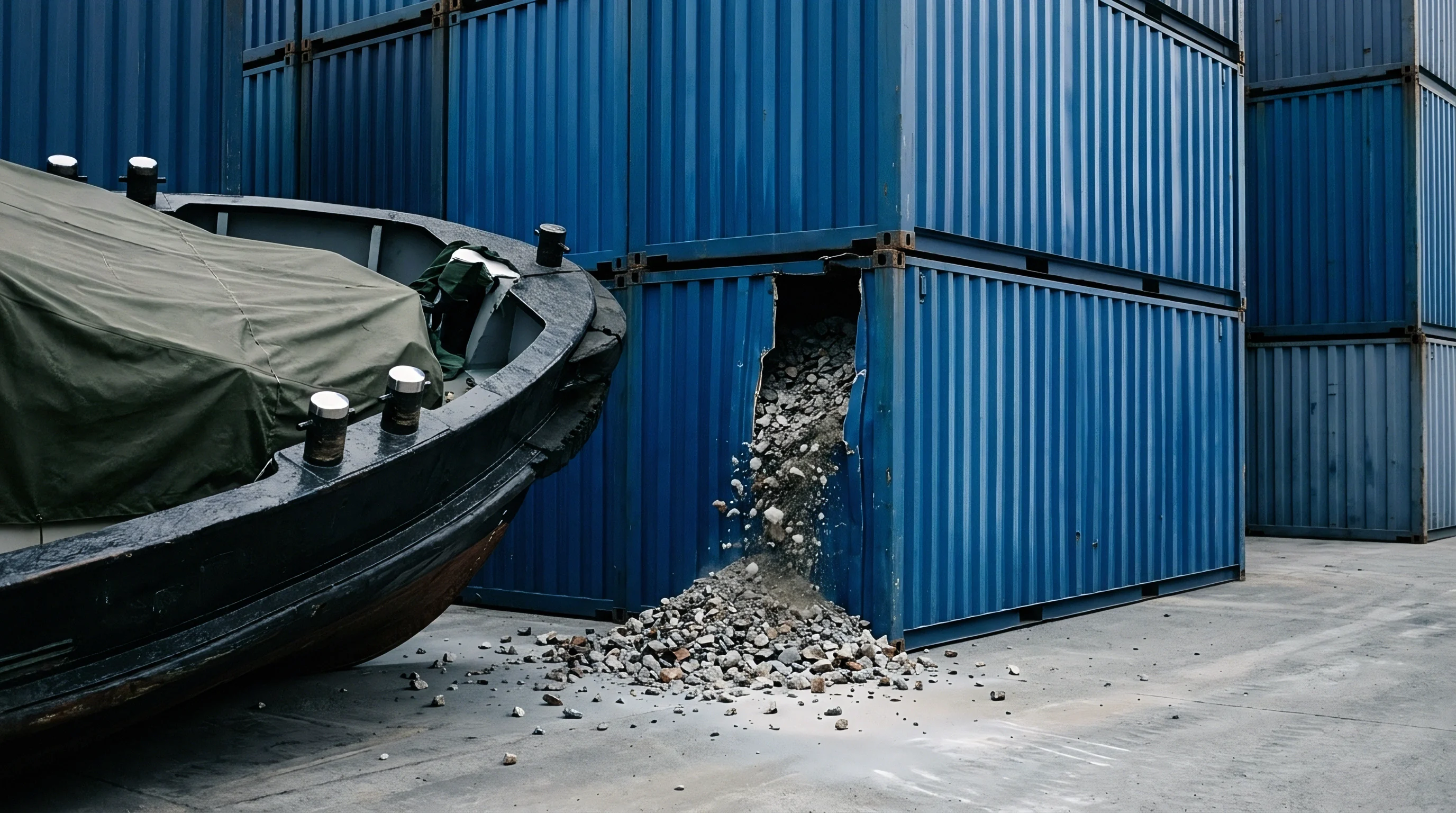
Most all-risks policies exclude damage arising from inherent vice or insufficient packaging. Inherent vice refers to the natural tendency of certain goods to deteriorate under standard transit conditions, such as fruit ripening, metal oxidizing, or rubber degrading. If the packaging is deemed inadequate to protect the goods during a normal journey, the insurer has the right to deny the claim.
To prevent this, buyers are required to ensure that the packaging conforms to international standards, using heavy-duty double-wall corrugated cartons, desiccants, and moisture-barrier foils where appropriate. If the factory fails to use these protective measures, and the goods arrive damaged due to humidity or condensation, the insurance claim will be rejected on the basis of inadequate preparation.
Unprotected electronic assemblies sustain internal short-circuits when condensation forms on the surface of the solder mask during transit through high-humidity ports.
The factory usually asserts that the goods left the warehouse in pristine condition and that the water damage resulted from a faulty container roof.

Claim
Importers who seek financial compensation after cargo damage has occurred are required to adhere to reporting timelines and gather strict evidence.
The standard claims procedure requires immediate action upon receipt of the damaged goods. Photographs prove the damage occurred. If the receiver signs the delivery docket without noting the damage, the carrier is presumed to have delivered the goods in good condition, which makes a subsequent claim highly difficult to prove.
Prompt reporting prevents claims from dying. Therefore, the warehouse supervisor has to perform a rapid visual inspection of the container and its seal before signing any paperwork. Once damage is suspected or identified, a formal joint survey has to be arranged with the carrier’s representative and an independent marine surveyor appointed by the insurer to document the extent and cause of the loss.

Step-by-Step Reporting Procedure
To ensure the claim is not rejected on procedural grounds, the importer has to follow a precise sequence of actions from the moment the truck arrives at the loading dock:
- The receiver records the physical seal numbers of the container prior to opening the doors on the loading dock.
- The warehouse team documents all visible wetness, crushing, or torn materials with high-resolution digital photographs.
- The logistics manager submits a formal written notice of claim to the carrier within three days of delivery to preserve recovery rights.
- The operations officer submits the complete claim dossier, including the bill of lading, commercial invoice, packing list, and survey report, to the underwriter.
Filing a protest within the three-day statutory limit preserves the buyer’s right to pursue a shipping line for hidden ocean-transit damages.
Failing to document container seal numbers on the delivery docket prevents the recovery of losses from pilferage, leaving the buyer to absorb the entire financial burden of the missing stock.

Discrepancy
Inconsistencies between the declared bill of lading and the physically inspected cargo routinely lead to the denial of coverage during a survey.
These inconsistencies typically arise when the supplier declares a generic product description on the transport documents to obtain a lower freight rate or bypass customs inspections, while the physical goods represent a highly sensitive category of electronics. When an accident occurs, the underwriter compares the description on the bill of lading with the actual physical items found in the container. If a mismatch exists, the policy is often declared void due to material misrepresentation.
English courts govern international disputes. Shippers have to ensure that every document, from the commercial invoice to the certificate of insurance, contains identical weights, piece counts, and product classifications to avoid these costly coverage disputes.
Jurisdiction and Settlement Obstacles
Even with comprehensive documentation, resolving a dispute can become exceedingly difficult when the insurer is based in a different country than the buyer. Local regulations and court systems interpret the terms of the policy differently, which can delay settlements for months or even years. In some jurisdictions, local courts do not recognize the carrier’s liability exclusions for labor strikes or force majeure, while others hold them to be absolute.
This geographic divergence is something a standard trade contract cannot fully resolve, as the choice of law clause in the insurance certificate determines which legal system governs the contract. Buyers can minimize this exposure by insisting on insurance policies written under English law and subject to the jurisdiction of the High Court in London, which remains the global standard for maritime dispute resolution.
Whether national courts will continue to uphold the standard exclusions for electronic failure under Clause A remains a disputed point among international trade lawyers.