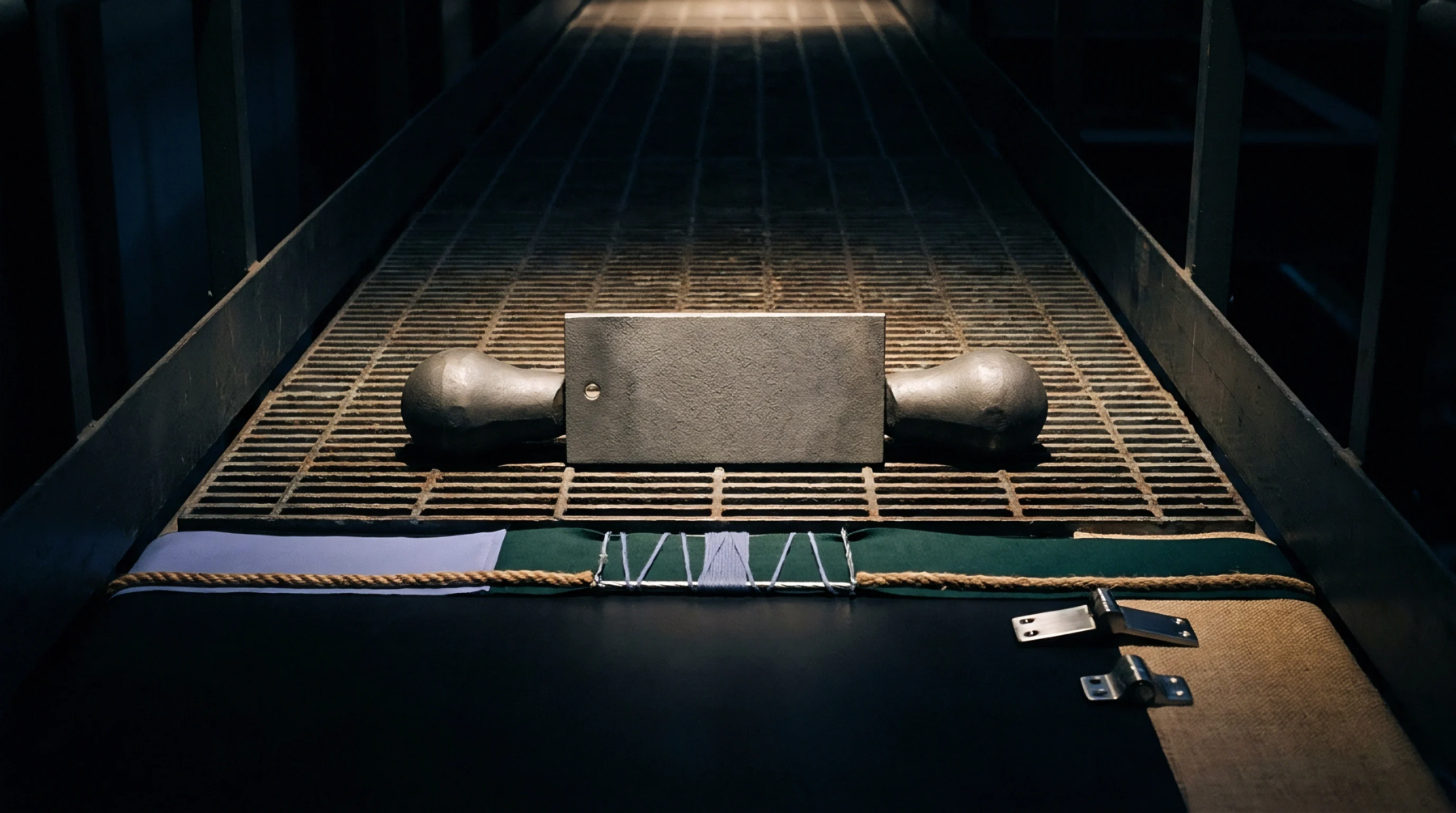
Non-Recurring Engineering
Meaning ~ Non-Recurring Engineering is the one-time cost itemized in supply agreements to cover custom tooling, design, and testing required to initiate manufacturing.
Carbon and alloy steel varieties that possess high hardness and resistance to abrasion while maintaining their shape at elevated temperatures serve as the primary material for cutting or forming industrial parts. This tool steel is the foundation of the manufacturing industry because it is used to make the molds, dies, drills and blades that shape every other product. It is distinguished from ordinary structural steel by its high content of alloying elements like tungsten, molybdenum, chromium and vanadium.
The boundary of the material’s performance is set by its toughness, which is the ability to resist cracking under heavy impact. It governs the lifespan of a manufacturing tool and the quality of the parts it produces, as a tool that wears out too fast will cause dimensional errors in the finished goods.
Transformation of the metal into a hard, wear-resistant state occurs through a controlled process of heating and rapid cooling. This tool steel must be heat-treated in a vacuum furnace to achieve its final strength without becoming too brittle. If the heat treatment is done incorrectly, the tool will either be too soft and wear out in a few days or too hard and shatter like glass the first time it hits a piece of metal.
The specific hardness is measured on the Rockwell C scale, with most tools falling between 45 and 65 HRC. After the initial hardening, the steel is tempered to relieve internal stresses and reach the perfect balance of hardness and toughness. This complex process is the most expensive part of making a high-quality tool.
Selection of the specific grade depends on the type of work the tool will be doing. This tool steel comes in different categories, such as cold-work steel for stamping and hot-work steel for die casting. Water-hardening grades are the simplest and cheapest, but they are prone to warping during the cooling process.
Air-hardening grades are more stable and are used for complex shapes that must keep their exact dimensions after heat treatment. High-speed steel is a special type that can stay hard even when it is glowing red from the friction of a fast-moving drill bit. Each alloy is a trade-off between cost, ease of machining and final performance.
Choosing the wrong grade can lead to a tool that is either too expensive for the job or not strong enough to finish the production run.
Failure of a tool is usually caused by the gradual loss of material from the cutting edge or the mold surface. This tool steel is designed to resist this wear for as long as possible, but eventually every tool must be sharpened or replaced. The surface of the steel can be further protected by adding coatings of titanium nitride or diamond-like carbon.
These layers are only a few microns thick but they provide a massive increase in the surface hardness. When a tool begins to fail, it will produce parts with rough edges or incorrect sizes. This is why factories keep a close watch on the number of parts each tool has made.
Replacing the tool steel before it fails is much cheaper than dealing with a batch of ruined products. High-quality steel ensures that the factory can run at high speed with very little downtime.
Meaning ~ Non-Recurring Engineering is the one-time cost itemized in supply agreements to cover custom tooling, design, and testing required to initiate manufacturing.
Expertise is a utility, not a secret. sentiention™ publishes its working knowledge as open reference: intelligence layer covering the materials it sources, the markets it enters, and the reference that serves both.