Hague-Visby Rules
Meaning ~ International maritime convention governing ocean carrier liabilities, cargo claims, and risk allocation for goods shipped under a bill of lading.


Paperwork
Maritime carriage protocols are globally standardized under the Brussels Protocol of 1968, which lays down the international legal regime governing ocean carrier liabilities and cargo claims under a bill of lading from loading to discharge.
Ocean cargo owners frequently struggle to recover losses when ocean shipments are damaged at sea. Maritime trade is highly structured. These standards create a mandatory balance of strength between shippers and shipping lines.
Ocean carriers hold immense strength.
- Hague-Visby Rules govern the carrier liabilities. This legal instrument remains the primary defense for importers.
- Hague-Visby Rules allocate the financial burden of transit losses by setting baseline liability limits.
- Hague-Visby Rules invalidate shipowner attempts to write protective exculpatory clauses into ocean transport contracts.
Whether national courts will consistently align their interpretation of these maritime liability boundaries remains an open question that continues to split commercial lawyers across different jurisdictions.
Transit
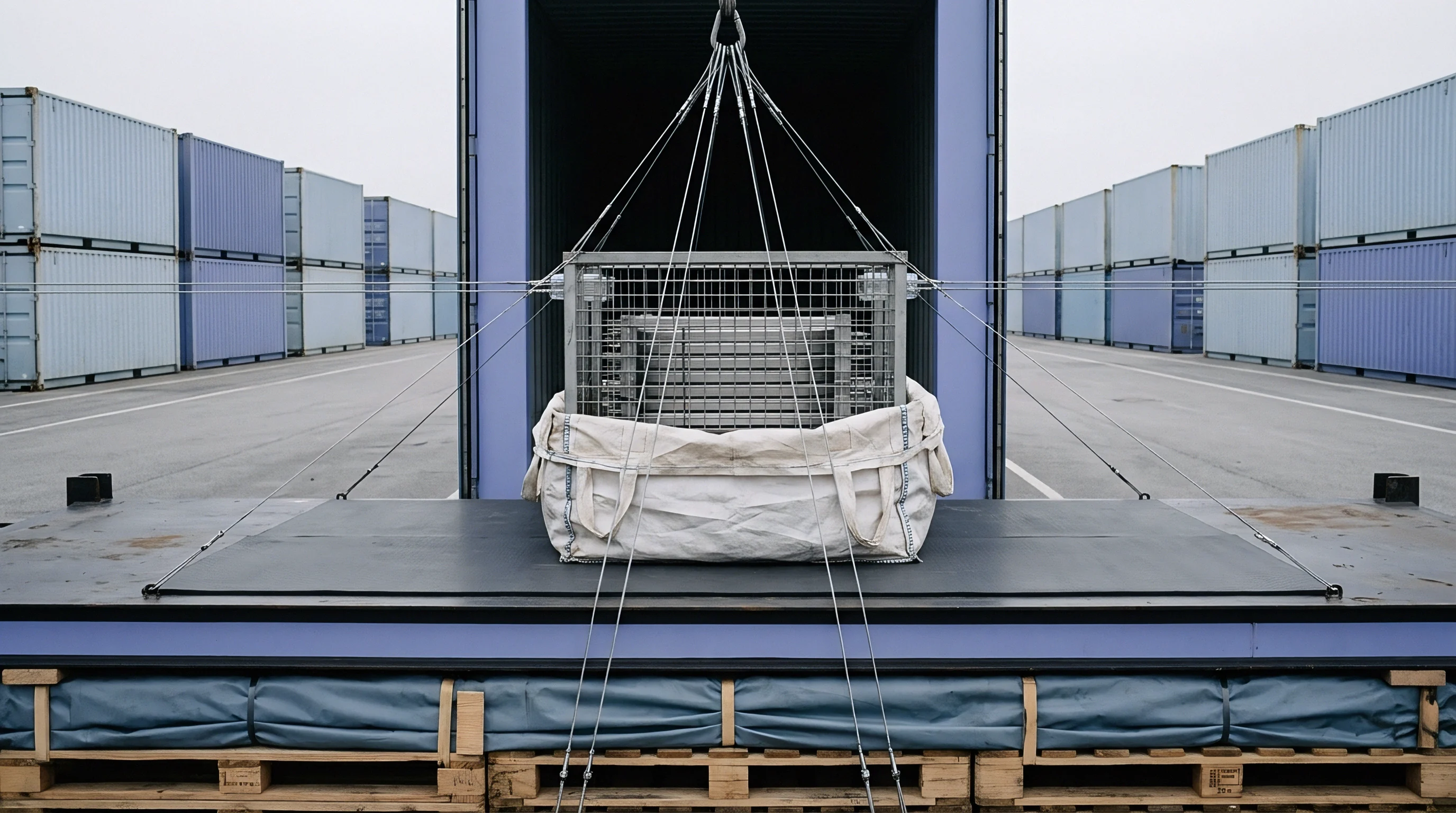
Ocean carrier liability applies exclusively to damage occurring during the maritime phase of a voyage. This temporal scope is traditionally designated as the tackle-to-tackle period, running from the moment the goods are lifted by the ship’s loading gear to the moment they are released at the port of discharge. Maritime trade is inherently risky.
Timing remains critical for claims.
Article III Rule 6 of the convention discharges the carrier from all liability unless the cargo owner files suit within twelve months of delivery.
Consignments damaged during land-based handling fall outside this maritime protection. When goods sit in a port warehouse or travel by inland rail, local laws or separate multimodal contracts govern the losses. Shippers are obligated to identify the exact point where the ship’s gear releases the cargo.
The safest commercial posture assumes that carrier protection terminates the moment the ocean vessel’s tackle releases the cargo at the quay.

Diligence
Maritime lines are obligated to make their vessels seaworthy before the ship starts its voyage. This obligation is not an absolute warranty but a standard of care. Seaworthiness is a continuous duty.
Defects destroy the carrier defense. The shipowner is required to ensure that the hull is structurally sound, the crew is properly trained, and the cargo holds are fit to receive the specific goods.
Inspectors check the hold seals. If a refrigeration unit fails or a hatch cover leaks because of inadequate maintenance, the carrier has failed in this primary duty. Such failure shifts the liability back to the shipowner.
Neglecting to document pre-shipment hold inspections strip-mines a cargo owner’s legal standing when moisture damage is discovered at the port of destination.

Swell
The liability structure allows specific immunities to ocean carriers when loss occurs due to events beyond their control. These immunities are listed as seventeen statutory exemptions. Shippers often find these exemptions highly frustrating.
The burden of proof is heavy. Cargo theft occurs occasionally.
- Hague-Visby Rules permit carriers to avoid liability for losses arising from nautical errors in the navigation of the ship.
- Hague-Visby Rules shield ocean lines from claims resulting from fire on board unless caused by the actual fault of the owner.
- Hague-Visby Rules exempt the maritime transport provider from financial consequences of acts of God or perils of the sea.
Unsecured cargo shifts easily. When a shipping line invokes an exemption, the cargo owner has to prove that carrier negligence or unseaworthiness was the true cause of the damage. Maritime carriers routinely claim that unexpected rough water, rather than structural neglect or poor lashing on deck, caused the loss of the cargo.


Arithmetic
Compensation under the Hague-Visby Rules is calculated using two distinct statutory limits to determine the maximum financial recovery. These limits are exceptionally low. Shippers are often shocked by the small amounts they receive after a major disaster.

How Is the Liability Limit Calculated?
Take a shipment consisting of a forty-foot container containing 20 palletized units of lithium-ion battery packs, with a total gross weight of 15,000 kilograms. Suppose the invoiced value of the cargo is 450,000 Special Drawing Rights (SDR). First, the per-package limit of 666.67 SDR is multiplied by the number of packages (20), yielding 13,333.40 SDR.
Second, the per-kilogram limit of 2 SDR is multiplied by the gross weight of 15,000 kilograms, which equals 30,000 SDR. The higher of the two figures governs, meaning the carrier’s maximum liability is capped at 30,000 SDR, leaving the cargo owner with a massive uncovered exposure of 420,000 SDR.
A damaged shipment of steel coils weighing ten thousand kilograms is subject to a maximum carrier liability of twenty thousand Special Drawing Rights.
The container clause is highly sensitive to the wording on the bill of lading. If the bill lists “one container” without specifying the units inside, the carrier’s liability is limited to a single package limit of 666.67 SDR. An explicit clause stating that each pallet constitutes a distinct shipping unit locks in the higher per-package limit and prevents the carrier from treating the entire container as a single package.
| Convention | Per-Package Limit | Per-Kilogram Limit | Nautical Fault Defense |
|---|---|---|---|
| Hague Rules of 1924 | 100 GBP | Not applicable | Available |
| Hague-Visby Rules | 666.67 SDR | 2.00 SDR | Available |
| Hamburg Rules of 1978 | 835.00 SDR | 2.50 SDR | Eliminated |
| Note: Special Drawing Right (SDR) values are calculated using daily IMF currency baskets. | |||

Verification
The process of recovering damages from an ocean carrier depends on strict adherence to notification and legal timelines. Receivers act with high speed. The time bar is absolute.
If damage is not immediately apparent, the buyer has to provide written notice within three days of delivery.
- Examine the discharged cargo on the quay immediately upon arrival.
- Draft a formal written notice of damage detailing the observed defects before removing the consignment.
- Secure a joint inspection by an independent marine surveyor to document the physical losses.
- Issue a formal claim letter to the shipping line to preserve the legal rights of the consignee.
- Initiate formal arbitration or lawsuit within twelve months of the discharge date to prevent the claim from expiring.
A failure to initiate formal legal arbitration before the anniversary of the delivery date permanently extinguishes the right to claim compensation under the rules.

Ledger
Financial managers and buyers protect their balance sheets by assessing the gap between statutory carrier liability and the true replacement value of their consignments. This deficit can ruin a small manufacturing business. Value declarations are very rare.
Marine insurance covers the remaining risk.
Declaring the actual monetary value on the face of the bill of lading removes the liability caps but triggers high ad valorem freight charges.
Carriers exploit every statutory defense. Declaring the full cargo value on the bill of lading removes the liability caps, but ocean lines charge expensive surcharges for this option. Most buyers choose to purchase third-party marine insurance instead, which covers the full value of the goods at a fraction of the cost.
Securing thorough all-risk marine insurance remains the most cost-effective method to cover the enormous liability gaps created by these ancient maritime liability limits.
| Cargo Type | Gross Weight | Invoiced Value | Maximum Recovery Limit | Uncovered Exposure |
|---|---|---|---|---|
| Industrial CNC Machine | 8,000 kg | 150,000 SDR | 16,000 SDR | 134,000 SDR |
| Lithium-Ion Battery Packs | 15,000 kg | 450,000 SDR | 30,000 SDR | 420,000 SDR |
| Aluminium Extrusions | 24,000 kg | 45,000 SDR | 45,000 SDR | 0 SDR |