Customs Clearance
Meaning ~ Procedures governing import and export declarations secure the release of foreign goods from border authority into domestic commerce.


Entry
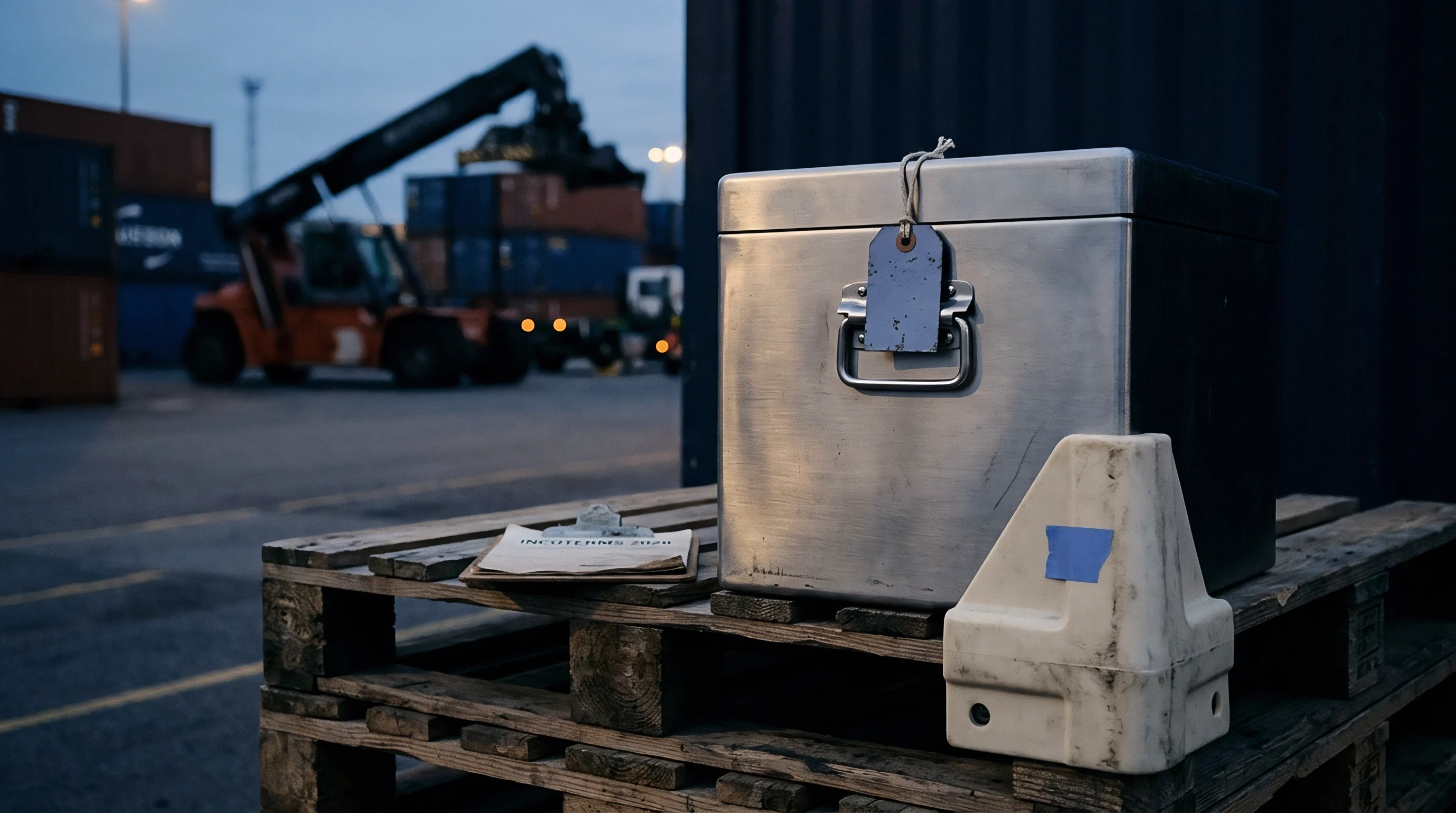
Administrative procedures governing international trade oblige every consignment of goods crossing a national border to undergo a formal declaration to state revenues and border authorities. Customs clearance marks the point where imported cargo moves out of international transit into domestic circulation, ending the carrier’s custody. Filing occurs electronically through an agency portal, typically handled by a licensed broker acting under a power of attorney.
The process concludes once the border agency issues an official release notification and allows the goods to move inland.
Documentary Architecture
Securing release relies on several standard records describing the cargo’s commercial and physical details. The commercial invoice establishes the transaction terms, while the packing list details the exact count and dimensions of the items. Bill of lading data must match these declarations precisely to avoid automated security flags.
A misspelling in the importer’s name or a minor weight discrepancy can halt a shipment for days. Under Delivered Duty Paid terms, the obligation to clear the entry and absorb any resulting administrative penalties falls entirely on the foreign seller.
- customs clearance submissions rely on the commercial invoice to establish the transaction price of the imported cargo.
- customs clearance paperwork necessitates an accurate packing list detailing the net and gross weights of every carton.
- customs clearance agencies retrieve the bill of lading to confirm that the physical consignee matches the legal importer.


Tariff
Determining the correct Harmonized System classification code dictates the rate of duty that is levied on foreign goods. The code determines not only the base tariff but whether the shipment incurs anti-dumping duties, countervailing measures, or preferential trade rates. Importers bear sole legal responsibility for classification, even when an entry is filed through an outside broker.
A single misclassified digit on a tariff declaration drives duty rate changes that can erase a buyer’s profit margin instantly.

Classification Rules
Importers categorize goods using a ten-digit coding structure standardized under international convention. The first six digits represent the global classification maintained by the World Customs Organization, with the remaining numbers reserved for national tariffs and statistical reporting. Misclassifying an item as a general metal bracket when it belongs under automotive components can lift the duty rate from zero to twelve percent.
When classification is ambiguous, selecting a specific subheading rather than a general basket provision reduces the likelihood of an administrative challenge.


Valuation
Customs authorities assess duties as a percentage of the transaction price paid or payable for imported merchandise. This base ~ the transaction value ~ reflects the net sum transferred from buyer to seller for the goods. If the transaction lacks a direct monetary exchange, or if a relationship between the parties influences the price, authorities resort to secondary methods such as deductive or computed value.
Related-party importers pay duties based on transfer prices that customs authorities adjust upward if the prices fail to reflect arm’s-length conditions.

Duty Base Composition
Duty calculations begin with the price paid or payable to the supplier, adjusted for statutory additions. These additions include assists: tooling, engineering, dies, or raw materials furnished by the buyer either free of charge or at reduced cost for use in production. Importers report assists directly to prevent undeclared value penalties during post-clearance audits.
Pre-production sample molds provided without charge remain dutiable assists regardless of whether an invoice notes them under a separate promotional arrangement.
| Cost Component | Duty Assessment Status | Reasoning and Conditions |
|---|---|---|
| Assists and Tooling | Assessed | Molds and dies funded by the buyer and supplied to the factory are amortized over the production run. |
| International Freight | Excluded | Charges for transport from the export port to the import terminal do not incur duties under FOB conditions. |
| Selling Commissions | Assessed | Fees paid to agents who act on behalf of the buyer to secure the sale form part of the transaction value. |
| Post-Importation Construction | Excluded | Assembly and technical assistance provided at the destination after entry represent non-dutiable costs if declared separately. |

Verification
Border agencies analyze submitted cargo declarations using automated risk-screening algorithms to isolate shipments for closer examination. When entry summaries are submitted, risk models cross-reference the data points against historical trading histories and regional profiles. If an entry triggers an alert, customs officials initiate either a document review or a physical cargo examination.

What Triggers a Physical Customs Examination?
Discrepancies across shipping documents or sharp variances in unit pricing and manifest weight trigger secondary port reviews. Interventions range from non-intrusive container imaging to intensive strip-and-count inspections at a centralized examination station. When documentation fails to satisfy an inspector, customs issues a Request for Information on CBP Form 28.
Automated screening programs frequently generate higher volumes of administrative alerts, increasing the manual review burden rather than expediting physical cargo flow.
- Automated programs scan the submitted digital declarations for consistency.
- Risk-management systems flag shipments based on tariff classification history.
- Officers inspect the documentation or issue a request for information.
- Personnel strip the container if an intensive search is ordained.
- Authorities either release the cargo or issue a formal notice of action.


Bond
Importers secure financial guarantees to ensure the government receives all duties, taxes, and fees. This financial contract involves three parties: the importer as the principal, the government agency as the obligee, and the underwriting company as the surety. If the importer defaults on duty payments or regulatory penalties, the surety takes responsibility for settling the debt up to the face value of the agreement.

Surety Requirements
A licensed surety issues this guarantee to satisfy statutory security requirements for commercial entry. Importers choose between continuous and single-transaction bonds based on shipment volume and operational scale. Without an active bond on file, the terminal diverts cargo to a bonded storage facility, exposing the importer to mounting holding fees and the risk of eventual government forfeiture.
- customs clearance continuous bonds protect the buyer from filing a separate guarantee for each inbound vessel.
- customs clearance single-transaction filings cover individual high-value shipments but incur higher fees per entry.
- customs clearance sureties reimburse the government if the principal fails to settle liquidated damages.


Dock
When a container ship arrives at a terminal and discharges its cargo, a strict countdown begins before storage charges accrue. Once the vessel unloads, terminal authorities grant a specific window of free time, during which the container can occupy the yard without penalty. If the documentation suffers from delays or customs holds the cargo for scrutiny, this allowance can elapse, giving rise to substantial late penalties.
Carrier storage fees accrue on containers left on the terminal after the free days expire, regardless of whether customs is holding the goods for examination.

Demurrage Schedules
Terminal operators calculate delay penalties through daily escalating tiers once free time runs out. The charges increase sharply after the initial grace period to clear container yards and maintain berth velocity. Importers limit these charges by pre-clearing entries prior to vessel arrival and dispatching drayage carriers the moment containers clear hold status.
Negotiating extended free time with the ocean carrier before cargo departs the origin port avoids unexpected terminal storage costs if an entry is delayed.
| Port Region | Standard Free Time | Daily Penalty Tier One | Daily Penalty Tier Two |
|---|---|---|---|
| North American West Coast | Four Days | One Hundred and Fifty Dollars | Three Hundred Dollars after Day Eight |
| Northern European Terminal | Five Days | Eighty Euros | One Hundred and Sixty Euros after Day Nine |
| East Asian Transit Hub | Three Days | Seventy Dollars | One Hundred and Fifty Dollars after Day Seven |