Contract of Carriage
Meaning ~ International transport agreements establish the carrier's obligation to move cargo against freight, formalized through a contract of carriage.


Instrument

The Contractual Document
International maritime and overland agreements formalize the carrier’s obligation to move cargo securely from origin to destination in exchange for freight, establishing where risk transfers and how liability is capped under the contract of carriage.
Rather than existing as a standalone agreement, the contract of carriage operates through a bill of lading or a non-negotiable sea waybill issued by the carrier, governing relations between the cargo owner and transporter. In ocean trade, the bill of lading acts simultaneously as cargo receipt, evidence of terms, and a document of title. When cargo is loaded under a charter-party, the bill of lading still functions as the governing legal instrument between the carrier and any subsequent holder.
Incorporating statutory transport acts via a standard clause subjects all domestic coastal voyages to the mandatory federal liability limits of the carrier.
Enforceability depends on national and international transport codes, such as the Carriage of Goods by Sea Act (COGSA). Under mandatory frameworks like the Hague-Visby Rules as enacted in the country of shipment, contract terms governing disputes nullify any attempt by the carrier to contract out of liability for negligence.


Allocations

Distributing Costs and Operational Duties
Commercial duties take effect the moment the shipper hands goods over to carrier custody, which does not necessarily match the delivery point specified in the commercial invoice. While commercial terms allocate freight payments, the contract of carriage details how the transporter must receive, stow, and protect the shipment. In containerized freight, this liability attaches as soon as the carrier takes receipt of the sealed container at the terminal gate prior to loading.
Shipowners rely on dedicated clauses to split local fees and terminal charges between parties. A contract of carriage usually outlines these costs in tariff sheets attached to the transport document, which shippers must review to reckon true landed costs. Until the ocean carrier issues a clean, un-ridered transport document at the port of origin, risk remains with the cargo owner.
- contract of carriage provisions determine which commercial party covers marine freight and port terminal handling charges.
- contract of carriage documents fix the precise moment liability transfers from shipper to carrier.
- contract of carriage clauses designate the default legal jurisdiction for arbitrating transit delays and shipping discrepancies.


Dock

Who Pays the Terminal Surcharges?
In traditional maritime law, the tackle-to-tackle rule bounded carrier custody, defining goods as loaded once past the ship’s rail or lifted by ship’s gear. Modern container transport extends that legal custody back to the inland container yard or port terminal gate. That broader window matters whenever cargo suffers damage before boarding: if a dock crane drops a container, the active contract of carriage dictates whose insurer absorbs the loss.
Discrepancies between the shipping docket and the ocean bill of lading routinely invalidate insurance claims during cross-border transit.
Unclear fee allocations expose importers to steep financial exposure. Demurrage and detention charges accumulate by the day whenever customs clearance stalls or equipment misses the agreed return window to the container yard. Free time, which usually spans three to seven days depending on the port of discharge, must be explicitly defined in the carriage contract; without defined delivery boundaries, carriers can hold cargo at destination and accrue heavy storage fees before releasing the shipment.


Limits

Statutory Liability Regimes
International conventions cap what a carrier must pay for lost or damaged cargo, protecting shipping lines against ruinous exposure. A standard contract of carriage incorporates these statutory limits through frameworks like the Hague-Visby Rules or Hamburg Rules, setting maximum recovery per package or per kilogram calculated in Special Drawing Rights (SDR), whose basket value fluctuates daily.
| Regime | Limit Per Package | Limit Per Kilogram | Application Scope |
|---|---|---|---|
| Hague-Visby Rules | 666.67 SDR | 2.00 SDR | Covered by bills of lading issued in contracting states |
| Hamburg Rules | 835.00 SDR | 2.50 SDR | All contracts of carriage by sea between two states |
| Rotterdam Rules | 875.00 SDR | 3.00 SDR | Multimodal contracts of carriage involving sea transit |
| Note: One Special Drawing Right corresponds to the official basket value set by the International Monetary Fund. | |||
When shipment values exceed statutory limits, cargo owners must declare the higher value on the bill of lading prior to loading and pay an ad valorem surcharge. Without that explicit declaration, the carrier can rely on package caps to restrict payout amounts.
- contract of carriage liability caps prevent buyers from recovering the full value of high-precision components unless they declare excess values on the shipping document.
- contract of carriage regimes like Hague-Visby apply a package-based or weight-based threshold to restrict the total financial recovery for damaged industrial shipments.
- contract of carriage rules calculate compensation using Special Drawing Rights rather than local currencies to maintain international valuation standards.

Exceptions

Carrier Immunities and Shifting Proof
Article IV of the Hague-Visby Rules contains a catalogue of immunities that relieve carriers of liability, covering acts of God, perils of the sea, war, and civil commotion. Chief among these defenses is the nautical fault exception, which excuses shipowners when cargo damage stems from crew error in navigating or managing the ship. To overcome these defenses, the shipper carries the burden of proving the vessel was unseaworthy prior to departure due to a failure of due diligence ~ a non-delegable duty of the carrier.
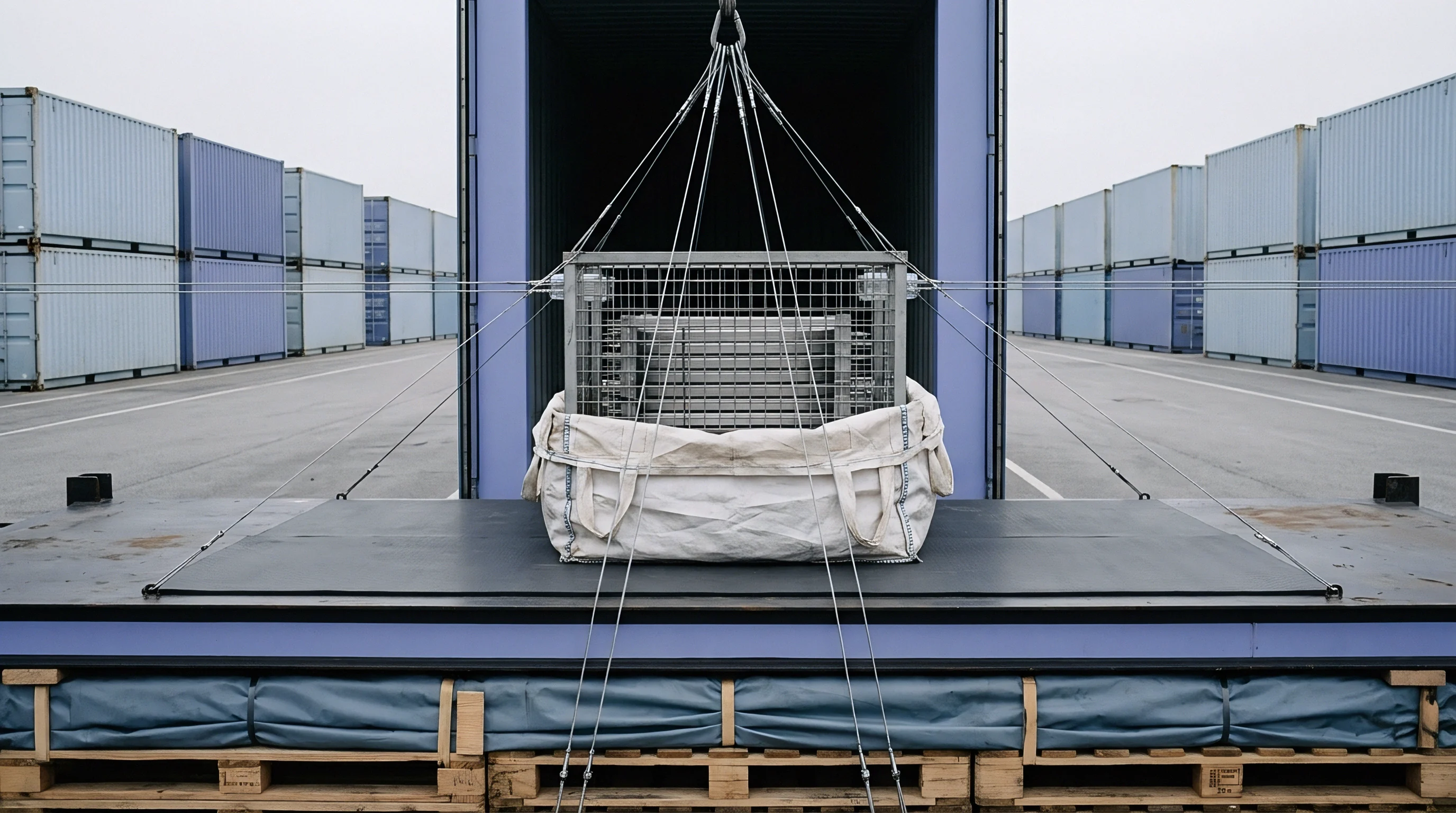
A standard shipping container held under Hague-Visby Rules limits carrier liability to two Special Drawing Rights per gross kilogram unless the shipper declares a higher cargo value before loading.
| Damage Type | Standard Defense Clause | Required Counter Evidence |
|---|---|---|
| Water Damage | Perils of the Sea | Proof of defective hatch cover seals prior to departure |
| Cargo Shifting | Insufficiency of Packing | Independent surveyor report proving standard securing methods |
| Asbestos Contamination | Inherent Vice | Clean inspection certificates issued at the loading terminal |
Challenging a carrier’s reliance on these immunities requires a structured investigation. Cargo owners typically evaluate an immunity defense through a step-by-step review:
- Obtain official vessel logbook entries and weather bureau reports for the transit dates to verify claims of extreme maritime conditions.
- Request maintenance and inspection records from the port of origin to confirm whether the vessel met seaworthiness standards before sailing.
- Examine stowage plans and container loading logs to check if improper weight distribution or crew handling caused the loss.
- Direct a maritime surveyor to inspect cargo damage patterns, establishing if water entered through defective hatch covers or hull seals.
The boundary between an isolated navigational error by the crew and fundamental unseaworthiness prior to departure remains one of the most frequently litigated issues in maritime law.


Recoveries

Filing Claims and Clean Receipts
Recovering losses for damaged transit goods hinges on proper documentation at the port of discharge. The contract of carriage requires prompt notice of loss: if damage is apparent upon arrival, the consignee must record specific reservations on the delivery receipt. When damage is hidden, Hague-Visby Rules allow a three-day window for written notification; missing this deadline establishes a legal presumption that the goods arrived in the condition stated on the bill of lading.
When a carrier delivers damaged cargo alongside a clean bill of lading, the burden of proof shifts immediately to the transport provider to establish that the damage occurred after discharge.
Lawsuits under a contract of carriage must be filed within one year of delivery. Because this tight window leaves little room for extended negotiation, cargo owners must file suit before time runs out to protect their right of recovery. The strict deadline protects ocean carriers against stale claims while requiring buyers to act promptly when physical damage is noted at discharge.